
PRESCRIPTION REQUIRED – Last updated:
Medically reviewed by VippHealth Pharmacy Advisory Board. About our editorial process
Amoxil
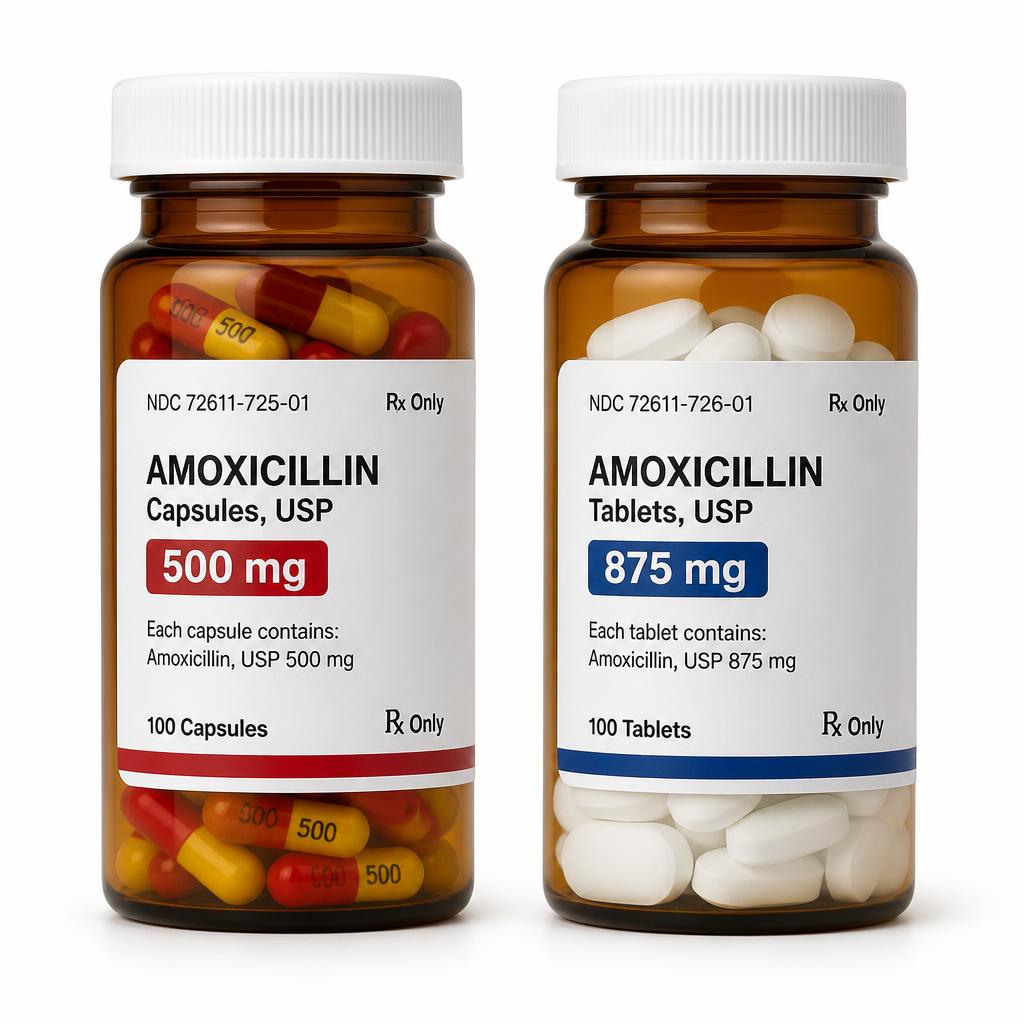
Amoxil is the brand name for amoxicillin, a broad-spectrum penicillin antibiotic prescribed for ear infections, strep throat, sinusitis, urinary tract infections and lower respiratory infections. It is one of the most commonly prescribed antibiotics in the United States. Available as 500mg capsules, 875mg tablets and liquid suspension for children, Amoxil remains a first-line treatment for numerous bacterial conditions. A valid prescription is required.
Unlike over-the-counter remedies, amoxicillin targets bacterial cell walls directly. This makes Amoxil effective for true bacterial infections but completely ineffective against viral illnesses like colds or influenza. Patients must complete the full prescribed course even if symptoms improve. Stopping early allows surviving bacteria to develop resistance.
What Is Amoxil
Amoxil contains amoxicillin, which belongs to the aminopenicillin class, a subgroup of beta-lactam antibiotics. It works by inhibiting bacterial cell wall synthesis. Specifically, amoxicillin blocks the transpeptidation reaction that bacteria need to build protective walls. Without intact walls, bacteria burst under osmotic pressure and die.
Doctors prescribe Amoxil for short-term and long-term management of bacterial infections. It is not effective for viral infections. Patients often confuse it with azithromycin or cefuroxime, but amoxicillin has broader gram-positive coverage and lower cost. Those obtaining medication through online pharmacies should verify they receive the exact strength prescribed by their doctor.
How Amoxicillin Works
Amoxicillin binds to penicillin-binding proteins inside bacterial cells. This prevents cross-linking of peptidoglycan chains in the cell wall. The wall weakens and ruptures. The drug is bactericidal, meaning it kills bacteria rather than merely slowing growth.
Key pharmacological properties:
- Acid stability – 75 to 90 percent oral bioavailability, even with meals
- Three-times-daily dosing – maintains therapeutic levels with convenient scheduling
- Low protein binding – distributes well into tissues, including middle ear and sinus fluid
- Renal excretion – eliminated unchanged in urine, making it ideal for UTIs
Amoxil vs Augmentin
Augmentin combines amoxicillin with clavulanic acid, a beta-lactamase inhibitor. Many bacteria produce beta-lactamase enzymes that destroy plain amoxicillin. Clavulanate neutralizes these enzymes. Doctors prescribe Amoxil for susceptible infections and Augmentin when resistance is suspected or confirmed by culture.
Conditions Treated with Amoxil
Doctors prescribe Amoxil for a wide range of bacterial infections. Patients researching treatment options online often have one of the following diagnoses:
- Ear, nose and throat: Acute otitis media, streptococcal pharyngitis, acute bacterial sinusitis, tonsillitis
- Respiratory: Community-acquired pneumonia, acute bacterial bronchitis, COPD exacerbations
- Urinary and gastrointestinal: Uncomplicated urinary tract infection, Helicobacter pylori eradication in combination therapy
- Skin and dental: Uncomplicated cellulitis, animal bite wound prophylaxis, dental abscess, periodontitis
- Other: Post-exposure Lyme disease prophylaxis, typhoid fever as alternative therapy
Amoxil Dosage and Strengths
Available Forms
Amoxil is manufactured in several forms to accommodate different age groups and treatment plans. Your doctor will select the appropriate form based on your infection, age and kidney function.
- 250mg capsules: Used for mild infections and pediatric patients over 40kg.
- 500mg capsules: Standard adult dose for most infections including ear infections, sinusitis and strep throat.
- 875mg tablets: Prescribed for more severe respiratory infections and H. pylori combination therapy.
- 125mg/5ml and 250mg/5ml suspension: Liquid form for children who cannot swallow capsules. Requires refrigeration and expires after 14 days.
Standard Adult Dosing
Dosing depends on the infection being treated. For mild to moderate infections, doctors typically prescribe 500mg three times daily. For severe infections or H. pylori eradication, 875mg twice daily or 1000mg twice daily may be required.
Always take Amoxil exactly as prescribed. Do not skip doses. Skipping allows bacteria to recover and develop resistance. Never save leftover capsules for future use. Do not share your medication with family members. Patients filling prescriptions through online pharmacies should verify they receive the correct strength and formulation.
Pediatric Dosing
Children receive amoxicillin based on body weight, typically 20 to 45mg per kilogram per day divided into two or three doses. The liquid suspension allows precise dosing. Never use adult capsules for young children. Overdose can cause seizures and kidney damage. Parents should measure liquid doses with an oral syringe, not a household spoon.
Missed Dose Instructions
If you miss a dose, take it as soon as you remember unless it is nearly time for your next scheduled dose. In that case, skip the missed dose and resume your normal schedule. Never double the dose to catch up. Doubling increases the risk of nausea, diarrhea and yeast overgrowth. If you miss multiple doses, contact your doctor. You may need to restart the course.
Side Effects
Common Side Effects
Most patients experience at least one mild side effect during treatment. These usually resolve after completing the course:
- Diarrhea – 8 percent of patients, usually mild and self-limiting
- Nausea and vomiting – 5 percent, take with food to reduce stomach upset
- Skin rash – 3 to 5 percent, often non-allergic and associated with viral illness
- Yeast infection – oral or vaginal thrush due to disruption of normal flora
- Headache – usually mild and transient
Serious Side Effects
Contact emergency medical services immediately if you experience:
- Difficulty breathing or facial swelling – possible anaphylaxis
- Severe watery diarrhea with blood or mucus – possible C. difficile infection
- Bloody urine or decreased urination – possible kidney damage
- Severe skin rash with blistering or peeling – possible Stevens-Johnson syndrome
- Unusual bruising or bleeding – possible blood disorder
Long-term or repeated courses increase the risk of antibiotic resistance and severe colitis. Doctors reserve prolonged therapy for specific indications like H. pylori eradication or Lyme disease.
Who Should Not Take Amoxil
Amoxil is contraindicated in patients with a history of anaphylaxis to penicillin or cephalosporin antibiotics. Cross-reactivity occurs in 5 to 10 percent of patients. It should not be used by individuals with a history of Stevens-Johnson syndrome or toxic epidermal necrolysis with any beta-lactam antibiotic.
Patients with infectious mononucleosis must avoid Amoxil. The drug causes a rash in approximately 90 percent of patients with active Epstein-Barr virus infection. Those with severe renal impairment require dose adjustment or alternative therapy to prevent drug accumulation.
Allergy Warnings
Approximately 10 percent of the population reports penicillin allergy, but only 1 percent have true IgE-mediated reactions. For those with genuine allergy, amoxicillin can cause life-threatening anaphylaxis within minutes of ingestion. Symptoms include airway constriction, shock and death.
Non-IgE reactions include serum sickness, which causes fever, joint pain and rash 1 to 3 weeks after exposure. Any patient who has ever developed hives, swelling or breathing difficulty after penicillin must avoid Amoxil permanently. Inform all healthcare providers of your allergy. Wear a medical alert bracelet if the reaction was severe.
Drug Interactions
Amoxicillin interacts with several medications. Always provide your doctor with a complete list of prescriptions, supplements and over-the-counter drugs.
- Allopurinol: Increases risk of amoxicillin-induced skin rash
- Probenecid: Blocks renal excretion, raising amoxicillin blood levels
- Warfarin: May increase INR; monitoring recommended
- Methotrexate: Amoxicillin may increase toxicity
- Oral contraceptives: Limited evidence of reduced efficacy; backup methods recommended as precaution
- Live vaccines: Amoxicillin may reduce vaccine effectiveness; delay vaccination until course completion
Amoxil and Pregnancy
Amoxil is FDA Category B. Human studies have not shown an increased risk of birth defects. The drug crosses the placenta but is generally considered safe during pregnancy. It is commonly prescribed for urinary tract infections in pregnant patients because it is effective against E. coli and safe for the fetus.
Amoxicillin passes into breast milk in small amounts. It is considered safe during breastfeeding. Infant diarrhea and oral thrush have been reported but are rare. Consult your obstetrician before starting any antibiotic during pregnancy or lactation. Use the lowest effective dose for the shortest possible time.
Overdose Information
Overdose symptoms include severe nausea, vomiting, diarrhea, abdominal pain, confusion, seizures and kidney failure. Very high doses may cause crystalluria, which leads to kidney stones and obstruction. An overdose requires immediate emergency medical attention. Do not induce vomiting unless instructed by poison control.
Chronic overdose from prolonged high-dose therapy causes persistent diarrhea, yeast overgrowth and antibiotic resistance. Treatment involves supportive care including hydration, electrolyte replacement and discontinuation of the drug. There is no specific antidote for amoxicillin overdose.
Amoxil for Pets
Veterinarians frequently prescribe amoxicillin for dogs and cats to treat skin infections, urinary tract infections and dental abscesses. The veterinary formulation uses the same active ingredient but different flavoring and concentrations. Dosing is calculated by body weight.
Pet owners should never give human Amoxil to animals without veterinary guidance. Incorrect dosing causes vomiting, diarrhea and antibiotic resistance. Fish amoxicillin sold at pet stores for aquarium use is not FDA-approved for human or veterinary use. It lacks quality control and safety testing.
How to Obtain Amoxil
Amoxil is available at licensed pharmacies with a valid prescription. Patients can fill prescriptions at local retail pharmacies, hospital pharmacies or verified online pharmacies. When evaluating online options, verify that the pharmacy requires a prescription and is licensed in your state.
Legitimate online pharmacies display accreditation from the National Association of Boards of Pharmacy or equivalent state regulatory bodies. Sources offering Amoxil without requiring a valid prescription operate illegally and may provide counterfeit, contaminated or incorrectly dosed medication. Any website advertising Amoxil at prices significantly below market rates should be treated with suspicion.
For children requiring liquid suspension, most pharmacies compound the medication on-site. The suspension requires refrigeration and expires after 14 days. Never use outdated liquid Amoxil. Shake the bottle well before each dose.
Storage and Handling
Store capsules and tablets at room temperature between 20C and 25C. Keep the container tightly closed and away from moisture, heat and direct light. Do not store in the bathroom. Keep out of reach of children and pets.
Liquid suspension must be refrigerated immediately after mixing. Discard after 14 days, even if unopened. Amoxicillin degrades into compounds that may cause adverse reactions after expiration. Dispose of unused medication through pharmacy take-back programs. Do not flush Amoxil unless instructed by local guidelines.
Frequently Asked Questions
Is Amoxil available over the counter?
No. Amoxil requires a prescription in the United States, Canada, United Kingdom and most other countries. It is not available over the counter because improper use contributes to antibiotic resistance, causes allergic reactions in penicillin-sensitive individuals, and can mask serious underlying conditions. Any source dispensing Amoxil without a valid prescription is operating illegally.
How fast does Amoxil work for infection?
Symptom improvement typically occurs within 24 to 72 hours for most bacterial infections. Ear infections require 48 to 72 hours for pain reduction. Strep throat symptoms improve within 24 hours, but the full 10-day course is required to prevent rheumatic fever. If no improvement after 3 days, contact your doctor. The infection may be viral or resistant.
Can you drink alcohol while taking Amoxil?
Moderate alcohol consumption is generally safe with Amoxil. There is no direct disulfiram-like reaction. However, alcohol may worsen side effects such as nausea and stomach upset. It also slows immune recovery. Best to avoid during treatment and for 48 hours after completing the course. Alcohol does not reduce Amoxil effectiveness.
What is the difference between Amoxil and penicillin?
Amoxil contains amoxicillin, a semi-synthetic derivative of penicillin with a broader spectrum of activity. It is effective against more gram-negative bacteria than penicillin V and has better oral absorption. Penicillin V is primarily used for strep throat and dental infections. Amoxil is preferred for ear infections, sinusitis and urinary tract infections. Both share the same beta-lactam mechanism and allergy profile.
Does Amoxil affect birth control?
The evidence is limited. Unlike rifampin, amoxicillin does not strongly induce liver enzymes. However, antibiotics can cause gastrointestinal upset that may reduce oral contraceptive absorption. The CDC recommends using backup contraception during Amoxil treatment and for 7 days after completing the course as a precaution. This is especially important for high-dose or prolonged courses.
Can Amoxil treat COVID-19?
No. Amoxil is ineffective against viruses including SARS-CoV-2. COVID-19 is caused by a virus, not bacteria. Taking antibiotics for viral infections wastes the drug, harms beneficial gut bacteria, and contributes to resistance. COVID-19 requires antiviral treatment or supportive care. Amoxil is only appropriate if a bacterial co-infection is diagnosed by a physician.
Why must I finish the entire Amoxil course?
Stopping Amoxil early allows surviving bacteria to multiply and develop resistance. Even if symptoms disappear after 3 days, bacteria may remain in low numbers. These survivors can evolve into resistant strains that future antibiotics cannot kill. Completing the full course ensures eradication and protects community antibiotic effectiveness. Never save leftover antibiotics for future use.
Is Amoxil safe for dogs and cats?
Yes, under veterinary supervision. Amoxil is commonly prescribed for dogs and cats to treat skin infections, urinary tract infections and dental abscesses. Veterinary formulations contain the same active ingredient with pet-appropriate flavoring and concentrations. Dosing is calculated by body weight. Human Amoxil can be used in emergencies with veterinary approval. Never give Amoxil to pregnant animals without veterinary guidance.
How much does Amoxil cost without insurance?
Generic amoxicillin cost without insurance typically ranges from 8 to 15 dollars for 30 capsules of 500mg, depending on pharmacy and location. Brand-name Amoxil costs 80 to 100 dollars or more. Most insurance plans cover generic amoxicillin with 0 to 5 dollar copay. Discount cards and pharmacy coupons reduce out-of-pocket costs by 10 to 20 percent. Liquid suspension costs 12 to 18 dollars for 150ml.
What happens if you miss a dose of Amoxil?
Take the missed dose as soon as you remember unless it is nearly time for your next dose. In that case, skip the missed dose and resume your normal schedule. Never double the dose. Doubling increases the risk of nausea, diarrhea and yeast overgrowth. If you miss multiple doses, contact your doctor. You may need to restart the course to ensure complete eradication.