SCHEDULE IV CONTROLLED SUBSTANCE – Last updated:
Medically reviewed by VippHealth Pharmacy Advisory Board. About our editorial process
Provigil
Provigil is a wakefulness-promoting agent. It contains modafinil. Doctors prescribe it only for three specific sleep disorders. It is a Schedule IV controlled substance. A valid prescription is mandatory. The drug enhances alertness without the cardiovascular rebound of amphetamine stimulants. Patients must take it in the morning to avoid insomnia. Never share or sell this medication.
Unlike Adderall or Ritalin, this drug does not produce a euphoric high or severe crash. Doctors prefer it for long-term sleep disorders because the abuse risk is lower than amphetamines. The FDA approved it in 1998. The liver enzyme CYP3A4 metabolizes it. Patients with severe hepatic impairment require dose reduction to 100mg daily. See the FDA DailyMed label for full prescribing information.
Modafinil Cost by Pharmacy and Strength
Generic modafinil costs significantly less than brand Provigil. Nuvigil (armodafinil) is a related drug with a longer half-life. Prices below reflect 2026 US pharmacy data with a valid prescription.
*Prices verified June 2026. GoodRx coupons reduce generic costs by an additional 10 to 20%. Most insurance plans require prior authorization for brand Provigil.
Monthly Cost: Generic versus Brand
Brand Provigil (30 tablets)
$920
Generic Costco (30 tablets)
$48
Generic Savings
$872
Provigil as a Schedule IV Wakefulness Agent
This drug is the brand name for modafinil. The FDA approved it in 1998. It is a prodrug. It is biologically active as administered. The liver converts prednisone into prednisolone. This drug does not require conversion. Patients with severe liver disease can use it. Doctors sometimes prescribe prednisolone directly for those patients instead of prednisone.
Doctors prescribe this medication for three specific sleep disorders only. It is not approved for other uses. Specialist approval is required for any deviation. The DEA classifies it as Schedule IV. This classification reflects a lower abuse potential than Schedule II stimulants. It still requires strict dispensing controls.
Mechanism and Receptor Targets
This drug acts on multiple neurotransmitter systems to promote wakefulness:
- Dopamine: weak reuptake inhibition improves focus without amphetamine-like crash
- Norepinephrine: increases alertness and sustained attention
- Histamine: promotes wakefulness via tuberomammillary nucleus signaling
- Orexin: stabilizes sleep-wake cycles in the hypothalamus
This mechanism treats sleepiness without the cardiovascular rebound of amphetamines. However, it still raises blood pressure 3 to 5 mmHg and heart rate 5 to 10 beats per minute. Patients with uncontrolled hypertension require alternative therapy.
Approved Sleep Disorders
Doctors prescribe modafinil for a narrow range of sleep disorders. Patients researching treatment options online often have one of the following diagnoses:
- Narcolepsy: excessive daytime sleepiness with or without cataplexy. Polysomnography and multiple sleep latency test are required for diagnosis.
- Obstructive sleep apnea: residual sleepiness despite adequate CPAP adherence. This drug is an add-on, not a replacement for CPAP therapy.
- Shift work sleep disorder: documented night shift history with impaired alertness during work hours. Diagnosis requires sleep diary and actigraphy.
These three indications require documented diagnosis. The drug is not prescribed for fatigue without underlying sleep pathology. A valid prescription requires polysomnography results or documented shift work history. For sleep apnea patients, CPAP adherence data is required.
Dosing by Diagnosis
Available Tablet Strengths
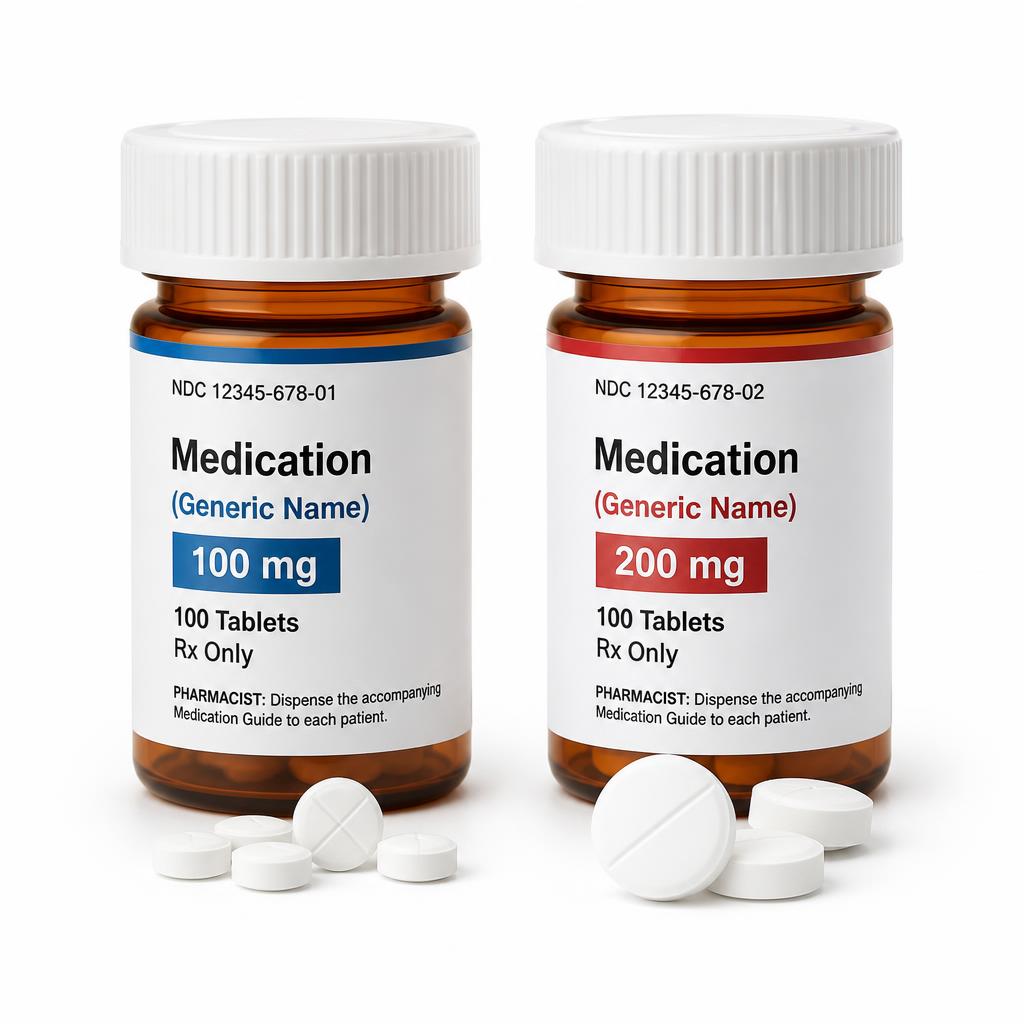
Modafinil is manufactured in two tablet strengths. Your doctor will select the appropriate strength based on your diagnosis, age, and response to therapy.
- 100mg tablets: used for elderly patients, those with hepatic impairment, and patients starting therapy to assess tolerance.
- 200mg tablets: standard adult dose for narcolepsy, sleep apnea, and shift work disorder. Some patients require 400mg daily split into two doses.
Standard Adult Dosing
Dosing depends on the condition being treated. For narcolepsy and obstructive sleep apnea, doctors typically prescribe 200mg once daily in the morning. For shift work disorder, 200mg is taken one hour before the start of the shift.
Always take this medication exactly as prescribed. Do not increase the dose without medical supervision. Higher doses increase the risk of insomnia, anxiety, and blood pressure spikes.
Tapering and Discontinuation
Unlike prednisone, this drug has no physiologic withdrawal syndrome. The body does not become physically dependent in the same way as with corticosteroids. However, abrupt cessation after months of daily use may cause rebound hypersomnia. Patients feel excessively sleepy for several days.
A standard taper reduces the dose by 50 to 100mg every three days. For example, a patient on 200mg might reduce to 150mg for three days, then 100mg for three days, then stop. Some doctors prefer a slower reduction below 100mg, dropping by 50mg every week. Patients should never create their own tapering schedule. Your doctor will adjust the speed based on how long you took the drug and your current dose.
Missed Dose
If you miss a dose, take it as soon as you remember unless it is nearly time for your next scheduled dose. In that case, skip the missed dose and resume your normal schedule. Never double the dose to catch up. Doubling increases the risk of insomnia, anxiety, and tachycardia. If you miss multiple doses, contact your doctor. You may need to restart at a lower dose.
Pediatric Considerations
This drug is not FDA-approved for children under 17 years. Pediatric use is limited to severe narcolepsy under specialist supervision. Long-term effects on developing brains are unknown. Parents should watch for mood changes, insomnia, and appetite suppression.
Cardiovascular and Psychiatric Risks
Stevens-Johnson Syndrome and Toxic Epidermal Necrolysis
Stop this drug immediately and seek emergency care if you develop rash with blistering, peeling skin, mouth sores, eye sores, fever with widespread skin redness, or swollen lymph nodes. SJS and TEN mortality ranges from 10 to 30 percent. Early discontinuation saves lives. The FDA mandates that patients carry an SJS Warning Card at all times.
Cardiovascular Risks
This drug increases heart rate by 5 to 10 beats per minute and systolic blood pressure by 3 to 5 mmHg. It is contraindicated in uncontrolled hypertension above 160 over 100 mmHg, history of left ventricular hypertrophy, recent myocardial infarction within six months, and significant arrhythmias. Patients with stable heart disease require baseline ECG and blood pressure monitoring at week 2, month 1, and month 3.
Psychiatric Adverse Effects
Contact your doctor immediately if you experience anxiety, agitation, or insomnia that interferes with daily function. Mania and hypomania can occur in patients with bipolar disorder. Hallucinations, delusions, and paranoia are rare but require immediate discontinuation and psychiatric evaluation. Suicidal ideation has been reported, especially in patients with pre-existing depression. Monitor mood closely during the first month.
Hormonal Contraception Failure
This drug induces CYP3A4 enzymes. This reduces hormonal contraceptive effectiveness by 18 to 25 percent. The effect persists for one month after stopping the drug. Use non-hormonal methods during treatment and for 30 days after discontinuation. Copper IUD, condoms, and barrier methods are recommended. Do not rely on birth control pills, patches, rings, or implants alone.
Adverse Reactions
Common Effects
Most patients experience at least one mild side effect during treatment. These usually resolve after dose adjustment or stopping the medication:
- Headache – 34 percent of patients, usually mild and resolving in one to two weeks
- Nausea – 11 percent, take with food to reduce stomach upset
- Nervousness or anxiety – 7 percent, dose reduction may help
- Insomnia – 5 percent, take before 8 AM to avoid sleep disruption
- Dry mouth – stay hydrated throughout the day
- Reduced appetite – monitor weight monthly
Serious Effects
Contact emergency medical services immediately if you experience:
- Severe skin reaction with blistering or peeling – call 911, possible SJS or TEN
- Chest pain or irregular heartbeat – ER immediately, possible cardiac event
- Suicidal thoughts – call 988 Suicide and Crisis Lifeline
- Hallucinations or psychosis – discontinue medication and seek psychiatric care
- Severe allergic reaction with difficulty breathing – 911, possible anaphylaxis
Long-term use increases the risk of hypertension, anxiety disorders, and sleep architecture disruption. Regular blood pressure checks and mental health screening are essential for patients on prolonged therapy.
Provigil versus Nuvigil
Provigil contains modafinil, a racemic mixture of R and S enantiomers. Nuvigil contains armodafinil, which is only the R enantiomer. The R enantiomer has a longer half-life of 15 or more hours compared to 12 to 15 hours for modafinil.
Nuvigil is typically prescribed once daily. Provigil may require twice-daily dosing in some patients. Both carry identical SJS and TEN risks and identical psychiatric warnings. Nuvigil is generally 10 to 15 percent more expensive than generic modafinil. In patients with healthy livers, both produce similar therapeutic effects. Dosing is not equivalent milligram for milligram. A 200mg Provigil tablet is roughly comparable to a 150mg Nuvigil tablet.
Contraindications and Precautions
This drug is contraindicated in patients with a history of Stevens-Johnson syndrome or severe skin rash with modafinil or armodafinil. Re-exposure can be fatal. It should not be used by individuals with hypersensitivity to modafinil, armodafinil, or tablet excipients.
Patients with uncontrolled hypertension above 160 over 100 mmHg, serious heart conditions, history of left ventricular hypertrophy, or mitral valve prolapse with arrhythmia must avoid this drug. Those with a history of psychosis, mania, or severe anxiety disorders require psychiatric clearance before starting therapy.
Drug and Hormone Interactions
This drug interacts with numerous medications. Always provide your doctor with a complete list of prescriptions, supplements, and over-the-counter drugs.
- Hormonal contraceptives: effectiveness reduced by 18 to 25 percent. Use non-hormonal backup for 30 days after stopping.
- Warfarin: INR may rise during concurrent use. Monitoring required.
- Cyclosporine: levels may drop because of CYP3A4 induction.
- Antifungals (ketoconazole): may increase modafinil levels in blood.
- Antibiotics (rifampin): may decrease modafinil effectiveness.
- Seizure medications (phenytoin, phenobarbital): reduce modafinil concentration.
Pregnancy and Breastfeeding
Modafinil crosses the placenta. Animal studies show fetal harm including low birth weight and skeletal abnormalities. Human data is limited. The FDA classifies modafinil as Category C. Pregnant patients should use the lowest effective dose for the shortest possible time. Discuss risks with your OB-GYN before starting or continuing therapy.
This drug passes into breast milk in small amounts. Infant sedation and poor feeding have been reported. Breastfeeding mothers should monitor infants for excessive sleepiness, poor weight gain, and irritability. Consult a pediatrician before nursing while on this medication. Some doctors recommend discontinuing breastfeeding during treatment.
Overdose Management
Overdose symptoms include severe agitation, insomnia, tachycardia, hypertension, tremor, nausea, diarrhea, and confusion. Very high doses may cause hallucinations or psychosis. An overdose requires immediate emergency medical attention. Do not induce vomiting unless instructed by poison control.
Chronic overdose from prolonged high-dose therapy causes persistent anxiety, hypertension, and sleep disruption. Treatment involves gradual dose reduction under physician supervision. There is no specific antidote for modafinil overdose. Supportive care includes blood pressure monitoring, sedation if needed, and cardiac monitoring.
Prescription Requirements
This drug is available at licensed pharmacies with a valid prescription. A DEA-compliant prescription from a licensed US provider is mandatory. Verify that any pharmacy requires a prescription and displays state licensure. Telehealth platforms can evaluate qualifying sleep disorders and transmit prescriptions to your pharmacy. The process requires documented diagnosis. Upload polysomnography results or documented shift work history. For sleep apnea patients, CPAP adherence data is required. This drug is an add-on, not a replacement for CPAP therapy.
Storage and Security
Store this drug at room temperature between 20C and 25C. Keep the container tightly closed and away from moisture, heat, and direct light. Do not store in the bathroom. Keep out of reach of children and pets. Schedule IV controlled substances must be stored in a secure location to prevent theft or misuse.
Dispose of expired or unused medication through a pharmacy take-back program. Do not flush this drug down the toilet unless specifically instructed. The DEA holds periodic National Prescription Drug Take-Back Day events for safe disposal of controlled substances.
Common Questions
Is modafinil available over the counter?
No. Modafinil is a Schedule IV controlled substance in the United States. It requires a valid prescription from a licensed physician. Any source dispensing modafinil without a prescription operates illegally and may provide unsafe products.
How long does Provigil stay in your system?
Provigil has a half-life of 12 to 15 hours. It takes approximately 2 to 4 days to fully clear from the body. Effects last 10 to 12 hours. Standard 5-panel drug tests do not detect modafinil, though specialized amphetamine screens may show false positives.
What is the difference between Provigil and Nuvigil?
Provigil contains modafinil, a racemic mixture of R and S enantiomers. Nuvigil contains armodafinil, only the R enantiomer. The R enantiomer has a longer half-life. Nuvigil is typically prescribed once daily. Both carry identical SJS and psychiatric risks. Dosing is not equivalent milligram for milligram.
Can you drink alcohol while taking modafinil?
Alcohol is not recommended. Both alcohol and modafinil affect the central nervous system. Combined use increases the risk of dizziness, impaired judgment, and cardiovascular stress. If you choose to drink, limit intake and avoid taking modafinil on the same day.
Does Provigil show up on a drug test?
Standard 5-panel drug tests do not detect modafinil. However, specialized amphetamine screens may show a false positive. If you have a prescription, disclose it to the testing facility beforehand. Military and aviation screenings may include modafinil testing.
Is modafinil safe for long-term use?
Long-term use requires careful monitoring. Risks include hypertension, anxiety disorders, and sleep architecture disruption. Doctors prescribe the lowest effective dose and schedule regular blood pressure checks and mental health screening. Patients should never extend treatment without medical approval.
Can modafinil be taken on an empty stomach?
Modafinil can be taken with or without food. Taking it with food reduces nausea in the 11 percent of patients who experience stomach upset. Morning dosing is preferred because it mimics natural wakefulness cycles and reduces insomnia. Take before 8 AM for best results.
What happens if you stop Provigil suddenly?
Sudden discontinuation after months of daily use may cause rebound hypersomnia. You may feel excessively sleepy for several days. Unlike prednisone, there is no physiologic withdrawal syndrome or adrenal crisis. A gradual taper over one to two weeks minimizes rebound sleepiness.
How much does generic Provigil cost without insurance?
Generic modafinil cost without insurance typically ranges from $48 to $65 for a thirty-day supply of 200mg tablets, depending on pharmacy and location. Bulk orders of 360 pills drop the price to 77 cents per pill. Discount cards and pharmacy coupons can reduce out-of-pocket expenses. Brand Provigil costs significantly more than generic modafinil.
How do I verify an online pharmacy for modafinil?
Purchase modafinil only from licensed pharmacies that require a valid prescription. Verified online pharmacies display accreditation from the National Association of Boards of Pharmacy or equivalent state regulatory bodies. Avoid websites offering modafinil without a prescription or at prices significantly below market rates. Legitimate pharmacy services provide pharmacist consultation and secure payment processing.
Key Takeaways
- Generic modafinil costs $48 to $65 monthly. Brand Provigil costs $800 to $1,000. Prior authorization is often required for brand.
- Take in the morning before 8 AM. Never take in the afternoon or evening. It causes insomnia.
- Stop immediately and call 911 for severe skin rash with blistering, peeling, or mouth sores. This may be Stevens-Johnson syndrome.
- Use non-hormonal birth control during treatment and for 30 days after stopping. The drug reduces contraceptive effectiveness.
- This is a Schedule IV controlled substance. Never share or sell your medication. Store in a secure location.
Sources
- U.S. Food and Drug Administration. Provigil (modafinil) Full Prescribing Information. Available at: FDA DailyMed
- Drug Enforcement Administration. Controlled Substance Schedules. Available at: DEA.gov
- National Institute of Neurological Disorders and Stroke. Narcolepsy Fact Sheet. Available at: NINDS.NIH.gov