PRESCRIPTION REQUIRED – Last updated:
Medically reviewed by VippHealth Pharmacy Advisory Board. About our editorial process
Doxycycline
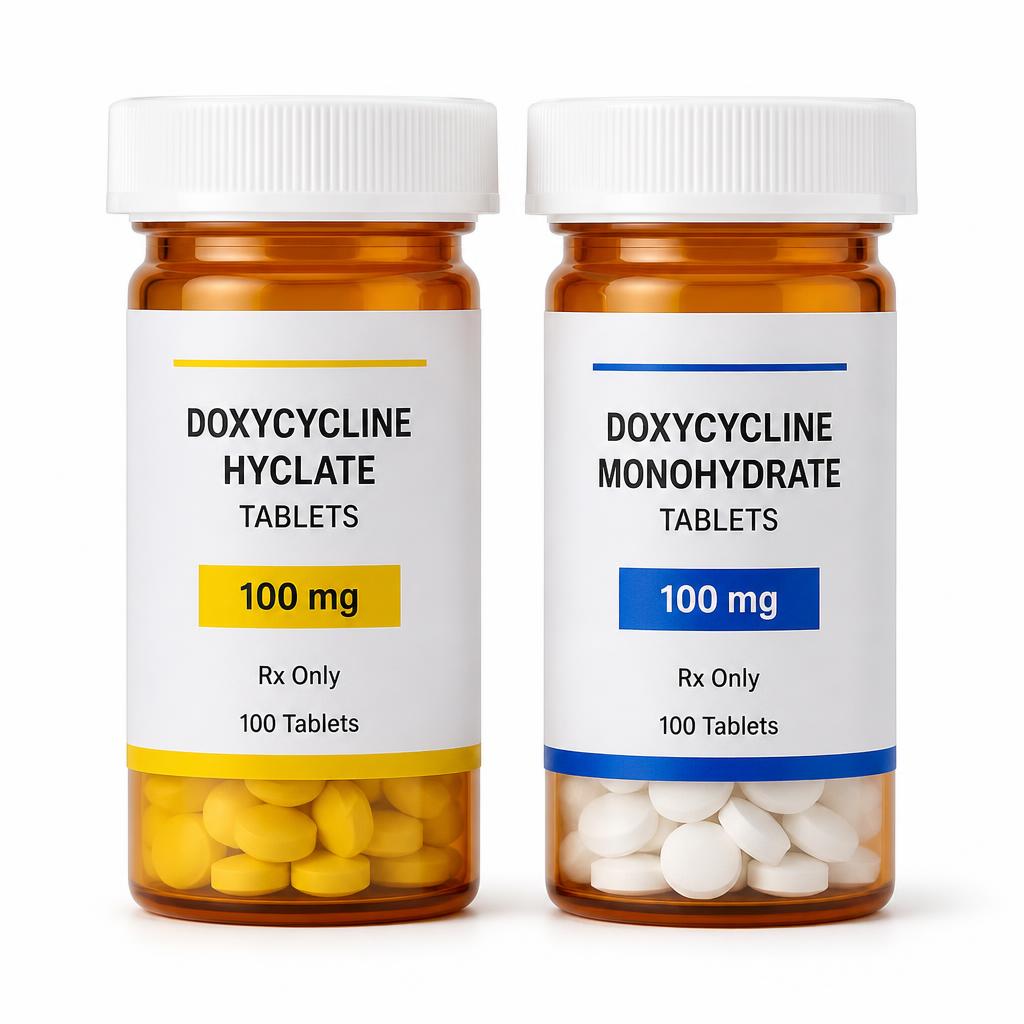
Doxycycline is a tetracycline antibiotic prescribed for Lyme disease, chlamydia, atypical respiratory infections and inflammatory acne. It is also used for malaria prophylaxis in travelers. Available as 100mg tablets in hyclate and monohydrate salt forms, doxycycline requires a valid prescription and medical oversight because incorrect use drives antibiotic resistance and causes severe photosensitivity.
Unlike amoxicillin, doxycycline covers atypical bacteria and spirochetes including Borrelia burgdorferi and Mycoplasma pneumoniae. The drug is bacteriostatic, meaning it stops bacterial growth rather than killing bacteria immediately. Patients must take it with a full glass of water and remain upright for 30 minutes to prevent esophageal ulceration. Those obtaining medication through online pharmacies should verify they receive the exact formulation prescribed by their doctor.
What Is Doxycycline
Doxycycline belongs to the tetracycline class of antibiotics. It works by binding to the 30S ribosomal subunit of bacteria. This blocks protein synthesis and stops bacterial growth. The drug is bacteriostatic at standard doses but bactericidal at higher concentrations.
Doctors prescribe doxycycline for specific bacterial infections and tick-borne diseases. It is not effective for viral illnesses including colds, influenza and COVID-19. Patients often confuse it with minocycline or tetracycline, but doxycycline has better oral absorption and fewer kidney side effects. Those obtaining medication through online pharmacies should verify they receive the exact strength and salt form prescribed by their doctor.
How Doxycycline Works
Doxycycline accumulates in tissues at concentrations higher than blood levels. This tissue penetration makes it effective for lung infections, sinusitis and genital tract infections. The drug concentrates inside white blood cells, which transport it directly to infection sites.
Key pharmacological properties:
- Acid stability: better than tetracycline, fewer stomach side effects
- Long half-life: 18 to 22 hours, allowing once or twice daily dosing
- High tissue penetration: effective for atypical pathogens and spirochetes
- Lipid solubility: crosses blood-brain barrier better than older tetracyclines
Doxycycline vs Minocycline
Doxycycline and minocycline belong to the same tetracycline class but differ in side effects and cost. Minocycline causes less photosensitivity and fewer GI upset symptoms. Doxycycline is cheaper and more widely available. Minocycline has a higher risk of vestibular side effects including dizziness. Doctors prefer doxycycline for most outpatient infections because of cost and established efficacy. Minocycline is reserved for cases where doxycycline intolerance or failure has occurred.
Conditions Treated with Doxycycline
Doctors prescribe doxycycline for a wide range of bacterial and tick-borne infections. Patients researching treatment options online often have one of the following diagnoses:
- Lyme disease: early localized and early disseminated stages, 10 to 21 day courses
- Chlamydia trachomatis: 100mg twice daily for 7 days as alternative to azithromycin
- Atypical respiratory infections: Mycoplasma pneumoniae, Chlamydophila pneumoniae, Legionella pneumophila
- Rocky Mountain spotted fever: and other rickettsial diseases, including in children under 8 when necessary
- Acne and rosacea: subantimicrobial doses of 40mg daily for inflammatory lesions
- Malaria prophylaxis: 100mg daily starting 1 to 2 days before travel and continuing 4 weeks after return
Doxycycline is not first-line for uncomplicated bacterial sinusitis or acute bronchitis. Most cases are viral and self-limited. Current guidelines recommend watchful waiting or amoxicillin-clavulanate for bacterial cases because macrolide and tetracycline resistance in respiratory pathogens has risen.
Doxycycline Dosage and Strengths
Available Forms
Doxycycline is manufactured in several forms and salt variations. Your doctor will select the appropriate form based on your infection, age and tolerance.
- 100mg tablets (hyclate): standard adult dose for most infections. Cheaper, more widely stocked.
- 100mg tablets (monohydrate): same active drug but better GI tolerance. Costs more than hyclate.
- 40mg delayed-release capsules: subantimicrobial dose for acne and rosacea. Not an antibiotic dose.
- 20mg tablets: low-dose formulation for long-term acne management.
- 25mg/5ml and 50mg/5ml suspension: liquid form for children who cannot swallow tablets.
Standard Adult Dosing
Dosing depends on the infection being treated. For most bacterial infections, doctors prescribe 100mg twice daily on day one, then 100mg once daily for 7 to 14 days. For Lyme disease, 100mg twice daily for 10 to 21 days is standard. For malaria prophylaxis, 100mg once daily starting 1 to 2 days before travel.
Always take doxycycline exactly as prescribed. Do not skip doses. Skipping allows bacteria to recover and develop resistance. Never save leftover tablets for future use. Do not share your medication with family members. Patients filling prescriptions through online pharmacies should verify they receive the correct salt form and strength.
Pediatric Dosing
Children over 8 years receive doxycycline based on body weight, typically 2 to 4mg per kilogram per day divided into two doses. Children under 8 years should not receive doxycycline except for life-threatening rickettsial diseases because it causes permanent tooth staining. The liquid suspension allows precise dosing. Parents should measure doses with an oral syringe, not a household spoon.
Missed Dose Instructions
If you miss a dose, take it as soon as you remember unless it is nearly time for your next scheduled dose. In that case, skip the missed dose and resume your normal schedule. Never double the dose to catch up. Doubling increases the risk of nausea and photosensitivity. If you miss multiple doses, contact your doctor. You may need to restart the course.
Photosensitivity and Sun Exposure
Doxycycline causes phototoxic reactions in skin exposed to UVA light. This is not an allergy. It is a chemical reaction between the drug and ultraviolet radiation that generates free radicals. Patients develop exaggerated sunburn, blistering or persistent redness after minimal exposure.
Phototoxicity peaks around day 3 to 5 of therapy and can persist for days after the last dose because the drug accumulates in skin and subcutaneous tissue. Some patients burn on overcast days because UVA penetrates clouds. Sunscreen alone does not fully prevent the reaction.
Patients must wear protective clothing, wide-brim hats and avoid midday sun. Schedule outdoor activities for early morning or evening. For patients who cannot avoid sun exposure, alternative antibiotics may be considered depending on the infection. Phototoxicity is dose-dependent and more common with doxycycline than with minocycline.
Side Effects
Common Side Effects
Most patients experience at least one mild side effect during treatment. These usually resolve after completing the course:
- Nausea and vomiting – 20 to 30 percent of patients, take with food to reduce stomach upset
- Diarrhea and abdominal pain – usually mild and transient
- Photosensitivity and sunburn – dose-dependent, peaks at days 3 to 5
- Loss of appetite – monitor weight during prolonged courses
- Vaginal yeast infection – due to disruption of normal flora
- Metallic taste – usually mild and temporary
Serious Side Effects
Contact emergency medical services immediately if you experience:
- Difficulty breathing or facial swelling – possible anaphylaxis
- Severe chest pain or difficulty swallowing – possible esophageal ulceration
- Severe watery diarrhea with blood or mucus – possible C. difficile infection
- Severe headache with vision changes – possible intracranial hypertension
- Yellowing of skin or eyes, dark urine – possible liver damage
Long-term or repeated courses increase the risk of antibiotic resistance and C. difficile colitis. Doctors reserve prolonged therapy for specific indications like acne or malaria prophylaxis.
Who Should Not Take Doxycycline
Doxycycline is contraindicated in pregnancy and in children under 8 years. Tetracyclines cross the placenta and deposit in fetal bone and teeth, causing permanent discoloration and enamel hypoplasia. They also pass into breast milk and can stain infant teeth. The only exception is life-threatening rickettsial disease in children, where the benefit outweighs the risk.
Patients with a history of anaphylaxis to tetracycline, doxycycline or minocycline must avoid the drug. Those with esophageal strictures, achalasia or severe gastroesophageal reflux should use caution because of ulceration risk. Patients with myasthenia gravis may experience worsening muscle weakness. Systemic lupus erythematosus patients may experience disease exacerbation.
Drug Interactions
Doxycycline interacts with several medications and supplements. Always provide your doctor with a complete list of prescriptions, over-the-counter drugs and supplements.
- Calcium, magnesium, iron, zinc, aluminum: found in antacids, multivitamins, dairy products and fortified beverages. These bind doxycycline and prevent absorption. Separate by at least 2 hours.
- Warfarin: INR may rise during concurrent use. Monitoring recommended.
- Barbiturates and phenytoin: accelerate doxycycline metabolism, lowering drug levels.
- Isotretinoin: combined use increases intracranial hypertension risk. Dermatologists generally avoid this combination.
- Methotrexate: levels may rise because of reduced renal clearance.
- Live vaccines: doxycycline may reduce vaccine effectiveness. Delay vaccination until course completion.
Doxycycline and Pregnancy
Doxycycline is FDA Category D. It is contraindicated during pregnancy because it crosses the placenta and deposits in fetal bone and teeth. Human studies have shown permanent tooth staining and enamel hypoplasia. Do not use during any trimester.
Doxycycline passes into breast milk and can stain infant teeth. It is not recommended during breastfeeding. Consult your obstetrician before starting any antibiotic during pregnancy or lactation. Alternative antibiotics like amoxicillin or erythromycin are preferred for most infections in pregnant patients.
Overdose Information
Overdose symptoms include severe nausea, vomiting, diarrhea, abdominal pain and liver damage. Very high doses may cause intracranial hypertension with severe headache and vision changes. An overdose requires immediate emergency medical attention. Do not induce vomiting unless instructed by poison control.
Chronic overdose from prolonged high-dose therapy causes persistent diarrhea, yeast overgrowth, photosensitivity and antibiotic resistance. Treatment involves supportive care including hydration, electrolyte replacement and discontinuation of the drug. There is no specific antidote for doxycycline overdose.
Doxycycline for Pets
Veterinarians frequently prescribe doxycycline for dogs and cats to treat heartworm pre-treatment (killing Wolbachia endosymbionts), kennel cough, ehrlichiosis and tick-borne diseases. The veterinary formulation uses the same active ingredient but different flavoring and concentrations. Dosing is calculated by body weight.
Pet owners should never give human doxycycline to animals without veterinary guidance. Incorrect dosing causes vomiting, diarrhea and antibiotic resistance. Fish doxycycline sold at pet stores for aquarium use is not FDA-approved for human or veterinary use. It lacks quality control and safety testing. Do not use fish antibiotics as a substitute for medical-grade doxycycline.
How to Obtain Doxycycline
Doxycycline is available at licensed pharmacies with a valid prescription. Patients can fill prescriptions at local retail pharmacies, hospital pharmacies or verified online pharmacies. When evaluating online options, verify that the pharmacy requires a prescription and is licensed in your state.
Legitimate online pharmacies display accreditation from the National Association of Boards of Pharmacy or equivalent state regulatory bodies. Sources offering doxycycline without requiring a valid prescription operate illegally and may provide counterfeit, contaminated or incorrectly dosed medication. Any website advertising doxycycline at prices significantly below market rates should be treated with suspicion.
For children requiring liquid suspension, most pharmacies compound the medication on-site. The suspension requires refrigeration and has a limited shelf life. Never use outdated liquid doxycycline. Shake the bottle well before each dose.
Storage and Handling
Store tablets and capsules at room temperature between 20C and 25C. Keep the container tightly closed and away from moisture, heat and direct light. Do not store in the bathroom. Keep out of reach of children and pets.
Liquid suspension must be refrigerated immediately after mixing. Discard after the expiration date on the bottle. Doxycycline degrades after expiration into compounds that may cause adverse reactions. Dispose of unused medication through pharmacy take-back programs. Do not flush doxycycline unless instructed by local guidelines.
Frequently Asked Questions
Is doxycycline available over the counter?
No. Doxycycline requires a prescription in the United States, Canada, United Kingdom and most other countries. It is not available over the counter because improper use drives antibiotic resistance, causes severe photosensitivity, and can mask serious underlying conditions. Any source dispensing doxycycline without a valid prescription is operating illegally.
What is the typical doxycycline dosage?
Adults usually take 100mg twice daily for 7 to 14 days depending on the infection. Lyme disease requires 100mg twice daily for 10 to 21 days. Acne uses 40mg delayed-release daily or 50 to 100mg standard dose. Malaria prophylaxis is 100mg daily starting 1 to 2 days before travel. Children over 8 receive weight-based dosing. Never self-dose.
Why can’t I go in the sun while taking doxycycline?
Doxycycline causes phototoxic reactions by generating free radicals in skin exposed to UVA light. Sunscreen helps but does not fully prevent burning. Protective clothing and shade are essential. The reaction peaks around days 3 to 5 and can persist after the last dose. Some patients burn on overcast days. Avoid midday sun exposure during therapy.
Can I take doxycycline with food?
Food reduces absorption by about 20 percent. The label recommends an empty stomach with a full glass of water. If nausea is severe, a small non-dairy snack is acceptable. Never take with dairy, calcium-fortified beverages, iron supplements or antacids within 2 hours. These bind the drug and prevent absorption entirely. Remain upright for 30 minutes after dosing to prevent esophageal ulceration.
What is the difference between doxycycline hyclate and monohydrate?
They are the same active drug with different salt forms. Hyclate is cheaper and more widely available. Monohydrate causes less stomach irritation and esophagitis. Both require the same sun and food precautions. Monohydrate typically costs more. If hyclate causes significant GI upset, ask your pharmacist about switching to monohydrate. Most pharmacies can order it within 24 hours.
Can doxycycline treat COVID-19?
No. Doxycycline is ineffective against viruses including SARS-CoV-2. COVID-19 is caused by a virus, not bacteria. Taking antibiotics for viral infections wastes the drug, harms beneficial gut bacteria, and contributes to resistance. COVID-19 requires antiviral treatment or supportive care. Doxycycline is only appropriate if a bacterial co-infection is diagnosed by a physician.
Can you drink alcohol while taking doxycycline?
No absolute prohibition exists. Doxycycline does not have a disulfiram-like reaction with alcohol. However, alcohol worsens dehydration and nausea, increases photosensitivity, and impairs immune recovery. Heavy drinking during antibiotic therapy is counterproductive. Moderate alcohol consumption is unlikely to cause direct harm, but most clinicians recommend avoiding alcohol until the infection resolves and the course is complete.
Is doxycycline safe for dogs and cats?
Yes, under veterinary supervision. Doxycycline is commonly prescribed for dogs to treat heartworm pre-treatment, kennel cough and tick-borne diseases. Dosing is calculated by body weight and differs from human protocols. Human formulations should not be given to pets without veterinary guidance. Fish doxycycline lacks human-grade quality control and should not be used by people.
How much does doxycycline cost without insurance?
Generic doxycycline 100mg costs 10 to 25 dollars for a 14-day course with pharmacy discount programs. The 40mg delayed-release formulation for acne runs 80 to 150 dollars monthly. Hyclate is cheaper than monohydrate. Brand-name Vibramycin is rarely used due to high cost. Discount cards reduce out-of-pocket costs for uninsured patients.
What happens if you miss a dose of doxycycline?
Take the missed dose as soon as you remember unless it is nearly time for your next dose. In that case, skip the missed dose and resume your normal schedule. Never double the dose. Doubling increases the risk of nausea and photosensitivity. If you miss multiple doses, contact your doctor. You may need to restart the course to ensure complete eradication.