SCHEDULE V CONTROLLED SUBSTANCE – Last updated:
Medically reviewed by VippHealth Pharmacy Advisory Board. About our editorial process
Lyrica
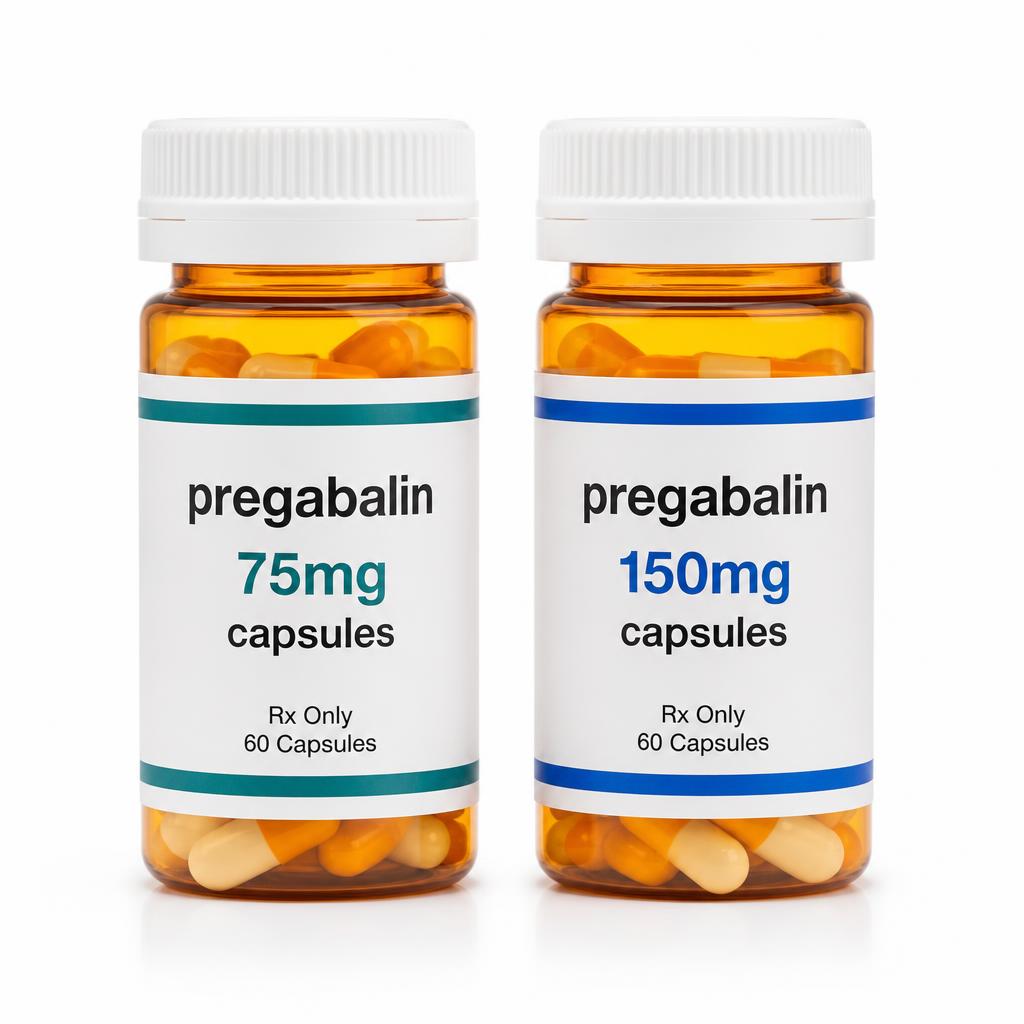
Lyrica is the brand name for pregabalin. It is a gabapentinoid medication. The FDA approved it in 2004. Doctors prescribe it for diabetic peripheral neuropathy, postherpetic neuralgia, fibromyalgia, spinal cord injury pain, and partial-onset seizures. It is a DEA Schedule V controlled substance. A valid prescription is mandatory. The drug requires medical oversight because it carries risks of angioedema, suicidal thoughts, and respiratory depression when combined with opioids.
Unlike gabapentin, this drug has linear absorption. Bioavailability exceeds 90 percent at any dose. It reaches peak concentration within one hour. It binds to the alpha-2-delta subunit of voltage-gated calcium channels. This reduces release of glutamate, norepinephrine, and substance P. The drug does not act on opioid receptors. It does not produce constipation or opioid-induced respiratory depression through that mechanism. However, it carries its own distinct safety warnings. See the FDA DailyMed label for full prescribing information.
Generic Pregabalin Pricing by Pharmacy
Generic pregabalin costs significantly less than brand Lyrica. Multiple manufacturers produce generic formulations. Brand-name Lyrica remains available but is rarely covered by insurance without prior authorization.
*Prices verified June 2026. Discount cards reduce generic costs by an additional 10 to 20%. Most insurance plans cover generic pregabalin with $5 to $35 copay.
Monthly Cost: Generic versus Brand
Brand Lyrica 150mg (60 tablets)
$354
Generic Costco 150mg (60 tablets)
$18
Generic Savings
$336
Pregabalin as a Gabapentinoid
This drug belongs to the gabapentinoid class. It binds with high affinity to the alpha-2-delta subunit of voltage-gated calcium channels. This binding reduces calcium influx into nerve terminals. It decreases release of excitatory neurotransmitters including glutamate, norepinephrine, and substance P. The net effect is dampening of abnormal nerve signaling.
This mechanism does not involve opioid receptors, GABA receptors, or sodium channels. It explains why the medication can be used in patients who cannot tolerate opioid analgesics. By modulating excitatory neurotransmitter release in the spinal cord, it interrupts central sensitization. This is the process that causes neuropathic pain to persist after the original nerve injury heals.
Pharmacokinetic Advantages over Gabapentin
This drug has two major advantages over gabapentin. First, it exhibits linear absorption. Bioavailability is 90 percent or greater regardless of dose. Gabapentin follows saturable absorption. Its bioavailability drops from 60 percent at 900mg daily to 33 percent at 3600mg daily. Second, this drug has six times higher binding affinity for the alpha-2-delta-1 receptor than gabapentin. It allows effective symptom control at lower doses. It reaches peak plasma concentration within one hour. Gabapentin takes approximately three hours. The drug is eliminated primarily unchanged by renal excretion. It has negligible hepatic metabolism. No cytochrome P450 drug interactions exist. Dose adjustment is mandatory in patients with reduced kidney function.
Neuropathic Pain and Seizure Targets
Doctors prescribe this medication for five distinct conditions. Patients researching treatment options online often have one of the following diagnoses:
- Diabetic peripheral neuropathy: nerve pain in hands and feet from diabetes. Starting dose is 50mg three times daily. Target is 300mg daily.
- Postherpetic neuralgia: nerve pain following shingles. Starting dose is 75mg twice daily or 50mg three times daily. Target is 150 to 300mg daily. Maximum is 600mg daily.
- Fibromyalgia: widespread musculoskeletal pain. Starting dose is 75mg twice daily. Target is 300 to 450mg daily. Maximum is 450mg daily.
- Spinal cord injury neuropathic pain: Starting dose is 75mg twice daily. Range is 150 to 600mg daily.
- Partial-onset seizures: adjunctive therapy for adults and children one month and older. Dosing is individualized by weight and age. Maximum is 600mg daily for adults.
This drug is not approved for generalized anxiety disorder in the United States. It is not approved for migraine prevention. It is not a first-line treatment for chronic low back pain without neuropathic features.
Dosing by Kidney Function
Dosing requires consideration of both the condition and renal function. This drug is eliminated almost entirely by renal excretion as unchanged drug. Creatinine clearance directly determines the safe dose.
For patients undergoing hemodialysis, a supplemental dose is administered immediately following each 4-hour session. The supplemental dose ranges from 25mg to 150mg depending on the maintenance regimen. No dose adjustment is needed for hepatic impairment. The medication can be taken with or without food. Taper gradually over a minimum of one week when discontinuing. Abrupt stopping causes withdrawal symptoms.
Angioedema and Suicidal Warnings
This drug carries an FDA boxed warning for suicidal thoughts and behaviors. Antiepileptic drugs increase this risk in approximately 1 in 500 patients. Risk is highest during the first month of therapy and after dose changes. Monitor mood daily. Contact your doctor immediately for worsening depression, agitation, or suicidal ideation. Call 988 or 911 for active suicidal thoughts.
Angioedema is a rare but life-threatening reaction. It causes swelling of the face, mouth, lips, gums, tongue, throat, or neck. Discontinue immediately and seek emergency care if symptoms develop. Difficulty breathing requires calling 911. Re-exposure can be fatal. Do not restart the drug after angioedema.
Peripheral Edema and Weight Gain
Most patients experience at least one mild side effect during treatment. These usually resolve or diminish after the first two to four weeks:
- Dizziness – 20 to 47 percent depending on dose and condition
- Somnolence – 13 to 36 percent, most pronounced during first two weeks
- Peripheral edema – 6 to 16 percent, monitor ankle circumference
- Weight gain – 4 to 14 percent, more common in diabetic patients
- Dry mouth – 4 to 7 percent
- Blurred vision – 3 to 10 percent, typically transient
- Constipation – 4 to 6 percent
- Difficulty concentrating – dose-dependent, more common in older adults
Serious Effects
Contact emergency medical services immediately if you experience:
- Swelling of face, mouth, or throat – possible angioedema
- Difficulty breathing or swallowing – airway emergency
- Severe dizziness with fainting – possible hypotension
- Suicidal thoughts or behavior – psychiatric emergency
- Severe muscle pain with fever – possible rhabdomyolysis
- Vision changes that persist – ophthalmologic evaluation needed
Opioid and Benzodiazepine Interactions
This drug interacts fatally with central nervous system depressants. The FDA issued a Drug Safety Communication in December 2019. Serious breathing difficulties may occur when gabapentinoids are combined with opioids or benzodiazepines. Profound sedation, respiratory depression, coma, and death may result.
Concomitant use with opioids requires the lowest effective dose of each drug. Monitor closely for respiratory depression. Consider prescribing naloxone for emergency overdose reversal. Never combine with alcohol. It increases sedation and impairs motor coordination. Avoid driving until you know how the drug affects you.
Because this drug is eliminated unchanged by kidneys, it does not undergo hepatic metabolism. No cytochrome P450 drug interactions exist. However, drugs that affect renal function can indirectly alter clearance. Dose adjustment may be needed if kidney function changes during therapy. Use caution with thiazolidinedione antidiabetic agents. Pioglitazone and rosiglitazone cause additive weight gain and peripheral edema.
Schedule V Controlled Substance Status
The DEA placed pregabalin into Schedule V in July 2005. This classification reflects accepted medical use and lower abuse potential than Schedule II through IV substances. However, it still carries regulatory requirements. Prescriptions can be refilled up to five times within six months. Prescribers must be DEA-registered. Dispensing is tracked through state Prescription Drug Monitoring Programs.
Post-marketing surveillance has validated scheduling concerns. A 2025 study found 44 percent of patients at a de-addiction center reported this drug as their primary substance of abuse. Mean daily dosage among abusers was 610mg. Irish data showed gabapentinoid-linked deaths increasing 35 percent annually between 2010 and 2020. Store this medication in a secure location. Never share your prescription. Never use another person’s medication.
Prescription Requirements
This drug is available at licensed pharmacies with a valid DEA-compliant prescription. Primary care physicians, neurologists, pain specialists, and psychiatrists can prescribe it after clinical evaluation. It is not available over the counter. Any website offering it without a prescription operates illegally. It may provide counterfeit or incorrectly dosed medication.
Most insurance plans require prior authorization for brand Lyrica. Step therapy often requires failure of gabapentin before approving pregabalin. Generic pregabalin is typically covered at Tier 2 or Tier 3. Verify that your pharmacy requires a prescription and displays state licensure.
Storage and Security
Store capsules at room temperature between 20C and 25C. Keep the container tightly closed. Protect from moisture, heat, and direct light. Do not store in the bathroom. Keep out of reach of children and pets. Schedule V controlled substances must be stored in a secure location to prevent theft or misuse.
Dispose of expired or unused medication through a pharmacy take-back program. Do not flush down the toilet unless specifically instructed. The DEA holds periodic National Prescription Drug Take-Back Day events for safe disposal of controlled substances.
Common Questions
Is this drug available over the counter?
No. This drug is a DEA Schedule V controlled substance in the United States. It requires a valid prescription from a DEA-registered physician. Any source dispensing pregabalin without a prescription operates illegally and may provide unsafe products.
What is the difference between pregabalin and gabapentin?
Pregabalin offers linear absorption with 90 percent bioavailability at any dose. Gabapentin exhibits saturable absorption where bioavailability drops at higher doses. Pregabalin is dosed twice daily. Gabapentin requires three times daily dosing. Pregabalin has six times higher receptor binding affinity. It reaches peak concentration in one hour versus three hours for gabapentin. Pregabalin is a Schedule V controlled substance. Gabapentin is not federally controlled, though seven states classify it as Schedule V.
Can you drink alcohol while taking this medication?
No. Alcohol must be avoided completely. Both alcohol and this drug are central nervous system depressants. Combined use significantly impairs motor coordination, judgment, and respiratory drive. Rare fatalities have been documented. Never combine with opioids or benzodiazepines without explicit medical supervision.
How do I stop taking it safely?
Taper gradually over a minimum of one week. Abrupt stopping causes withdrawal symptoms including insomnia, nausea, headache, anxiety, and diarrhea. In patients with epilepsy, abrupt withdrawal may increase seizure frequency. Your doctor will typically reduce the dose by 50 percent for three to seven days before complete cessation. Never discontinue seizure therapy without neurologist supervision.
How much does generic pregabalin cost without insurance?
Generic pregabalin 75mg costs $15 to $25 for 60 capsules at retail pharmacies. The 150mg strength costs $18 to $32 for 60 capsules. Discount cards reduce prices by an additional 10 to 20%. Brand Lyrica costs $320 to $380 for 60 capsules of 150mg. Most insurance plans cover generic pregabalin with $5 to $35 copay.
Can I take this drug with opioids?
Combining this drug with opioids significantly increases the risk of profound sedation, respiratory depression, coma, and death. The FDA issued a strengthened warning in December 2019. If concomitant use is absolutely necessary, use the lowest effective dose of each drug. Monitor closely for respiratory depression. Consider prescribing naloxone for emergency overdose reversal. Seek immediate help for confusion, extreme sleepiness, or slowed breathing.
Key Takeaways
- Generic pregabalin costs $15 to $32 for a 60-capsule supply. Brand Lyrica costs $320 to $380.
- Dose depends on kidney function. Patients below 30 mL/min clearance require 50 to 75% dose reduction.
- Never combine with opioids, benzodiazepines, or alcohol. Risk of fatal respiratory depression.
- Stop immediately and call 911 for facial swelling or difficulty breathing. This may be angioedema.
- This is a Schedule V controlled substance. Store securely. Never share your prescription.