PRESCRIPTION REQUIRED – Last updated:
Written and fact-checked by VippHealth Editorial Team from FDA labeling and clinical references. About our editorial process
Trazodone
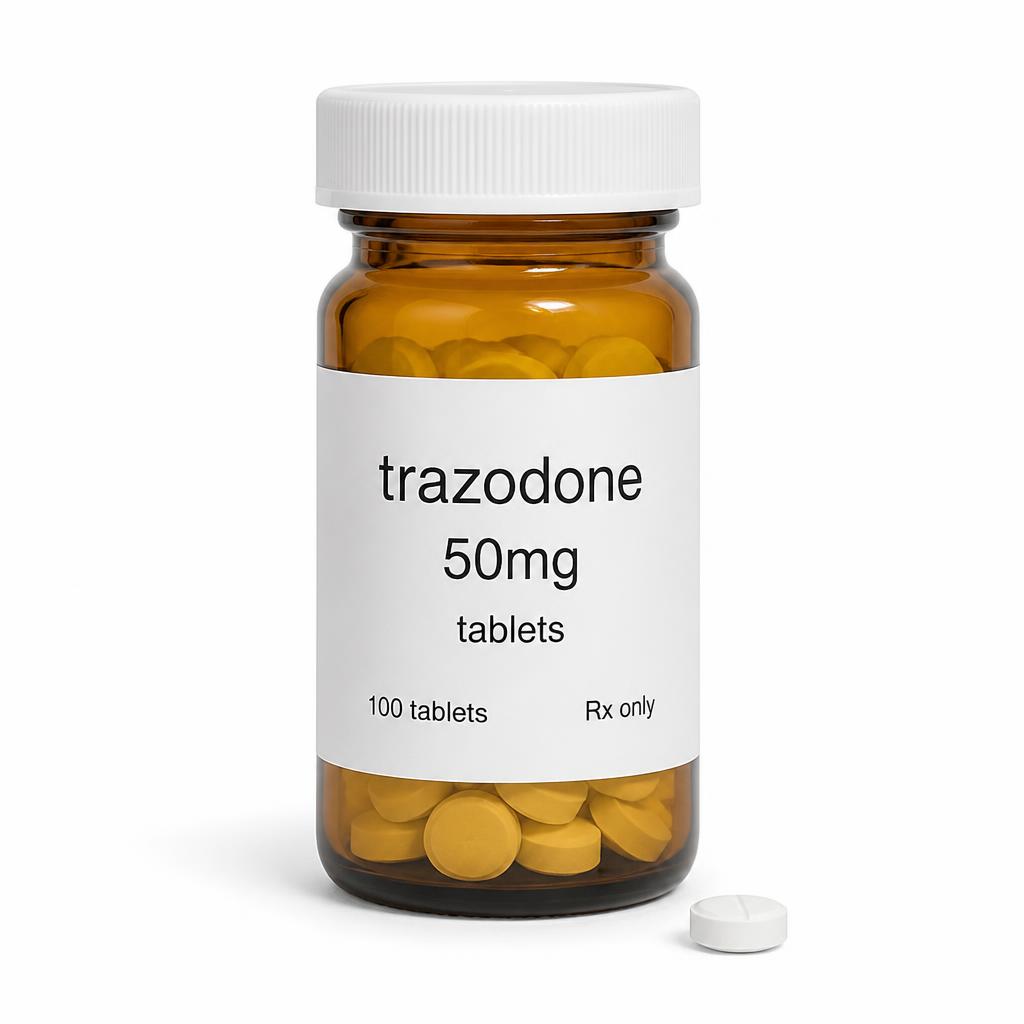
Trazodone is a serotonin antagonist and reuptake inhibitor. The FDA approved it for major depressive disorder in adults. Doctors also prescribe it off-label for insomnia. Trazodone requires a valid prescription. It is not a controlled substance. Effects begin in 30 to 60 minutes. Duration is 6 to 8 hours. Unlike Ambien, Trazodone carries minimal addiction risk.
Doctors prefer Trazodone for patients with substance use history. Trazodone causes sedation through histamine H1 and alpha-1 adrenergic blockade. Onset is 30 to 60 minutes. Duration is 6 to 8 hours. Always take it exactly as prescribed.
What Is Trazodone
Trazodone belongs to the serotonin antagonist and reuptake inhibitor class. It blocks 5-HT2A receptors. It also inhibits serotonin reuptake. At low doses, histamine H1 blockade produces sedation. At higher doses, the antidepressant effect becomes clinically relevant. The FDA approved Trazodone for major depressive disorder in adults. No approved pediatric indication exists.
How Trazodone Works
Trazodone acts on multiple receptor systems. Histamine H1 blockade causes drowsiness. Alpha-1 adrenergic antagonism reduces arousal. Serotonin reuptake inhibition elevates mood. The 5-HT2A blockade may improve sleep architecture. These effects are dose-dependent. The sedative effect dominates at 25 to 100mg. The antidepressant effect requires 150mg and above.
Trazodone vs Ambien
Trazodone and Ambien treat insomnia but work differently. Ambien is a non-benzodiazepine hypnotic. It targets GABA-A receptors. Trazodone blocks histamine H1 and serotonin 5-HT2A receptors. Ambien carries a higher risk of dependence and complex sleep behaviors. Trazodone carries minimal addiction risk. Ambien is a controlled substance. Trazodone is not.
Doctors prefer Trazodone for patients with substance use history. Ambien works faster. Onset is 15 to 30 minutes versus 30 to 60 minutes for Trazodone. Ambien duration is 6 to 8 hours. Trazodone duration is also 6 to 8 hours. Both require prescriptions.
Conditions Treated by Trazodone
Trazodone treats several conditions. Patients researching options often have one of the following diagnoses:
- Major depressive disorder: FDA-approved indication. Trazodone is used as monotherapy or adjunctive therapy.
- Insomnia: off-label use. Low doses at bedtime improve sleep onset and maintenance.
- Anxiety disorders: off-label. Trazodone reduces anxiety at doses of 50 to 75mg daily.
- Chronic pain with depression: off-label. Trazodone addresses both mood and sleep disruption in fibromyalgia and neuropathic pain.
- Post-traumatic stress disorder: off-label. Trazodone reduces nightmares and improves sleep quality in PTSD patients.
Trazodone Dosage and Strengths
Available Forms
Trazodone is manufactured in several tablet strengths. Your doctor will select the appropriate strength based on your diagnosis, age, and response.
- 50mg tablets: used for insomnia and anxiety. Starting dose for most patients.
- 100mg tablets: standard adult dose for depression and moderate insomnia.
- 150mg tablets: prescribed for major depressive disorder. Often used as maintenance dose.
- 300mg tablets: maximum daily dose for severe depression under specialist supervision.
Standard Adult Dosing
For insomnia, doctors typically start with 25 to 50mg at bedtime. The therapeutic range is 25 to 100mg. For major depressive disorder, the starting dose is 150mg daily divided. The range is 150 to 400mg. For anxiety, 50 to 75mg daily is common. Never self-dose. Never split scored tablets unevenly. Do not crush extended-release formulations.
Pediatric Dosing
Trazodone is not FDA-approved for children. Pediatric use is limited to severe depression or insomnia under specialist supervision. Long-term effects on developing brains are unknown. Parents should watch for mood changes, increased appetite, and difficulty sleeping.
Missed Dose Instructions
If you miss a dose, take it as soon as you remember unless it is nearly time for your next scheduled dose. In that case, skip the missed dose. Never double the dose. Doubling increases the risk of orthostatic hypotension and next-day grogginess. If you miss multiple doses, contact your doctor. You may need to adjust your tapering schedule.
Tapering and Discontinuation
Abrupt cessation after prolonged use produces antidepressant discontinuation syndrome. Symptoms include anxiety, agitation, irritability, insomnia, dizziness, headache, nausea, sweating, and sensory disturbances. These begin within one week. They peak around days 2 through 4. They resolve within 2 to 6 weeks.
A gradual taper is mandatory. Standard practice reduces the dose by 25 to 50mg every 1 to 2 weeks. Slower tapers may be necessary for high-dose patients or those on therapy for years. Never stop Trazodone abruptly without medical guidance. Depression relapse can occur.
Side Effects
Common Side Effects
Most patients experience at least one mild side effect during treatment. Clinical trial data from the FDA label shows the following rates for the most common reactions. Drowsiness occurs in up to 41 percent of outpatients. Dry mouth affects up to 34 percent. Dizziness occurs in up to 28 percent. Headache occurs in up to 20 percent. Blurred vision affects up to 15 percent. Nausea and vomiting occur in up to 13 percent. Constipation affects up to 8 percent. Weight gain occurs in up to 5 percent of outpatients. These usually resolve after dose adjustment.
Serious Side Effects
Contact emergency medical services immediately if you experience:
- Painful erection lasting more than 4 hours. Priapism is rare but documented. Call 911 immediately. Delay causes permanent tissue damage and impotence.
- Severe skin rash with blistering, fever with widespread redness, or swollen lymph nodes. Stop Trazodone and seek emergency care.
- Suicidal thoughts or severe depression after starting therapy. Call 988 Suicide and Crisis Lifeline or 911.
- Signs of serotonin syndrome. Agitation, fever, sweating, tachycardia, tremor, and muscle rigidity. Risk increases when combined with other serotonergic agents.
- Irregular heartbeat or fainting. Possible QT prolongation. Seek emergency care.
- Severe confusion, headache, or seizures. Possible hyponatremia. Seek emergency care.
Who Should Not Take Trazodone
Trazodone is contraindicated in patients recovering from myocardial infarction. Do not use it within 14 days of monoamine oxidase inhibitor therapy. The absolute contraindication with MAOIs mandates a 14-day washout period in either direction.
Patients with a history of priapism, sickle cell anemia, multiple myeloma, or leukemia must avoid Trazodone. These conditions increase priapism risk. Those with severe hepatic impairment require dose adjustment or alternative therapy.
Warnings and Precautions
Suicidal Thoughts and Behaviors
Antidepressants increase the risk of suicidal thinking and behavior in children, adolescents, and young adults ages 18 through 24 during initial treatment and dose adjustments. Trazodone is not approved for use in pediatric patients. Short-term studies did not show an increase in suicidal risk among adults older than 24. Monitor mood closely during the first month of therapy.
Serotonin Syndrome
Serotonin syndrome is a potentially life-threatening condition. Symptoms include agitation, fever, sweating, tachycardia, tremor, and muscle rigidity. Risk increases when Trazodone is combined with other serotonergic agents. The absolute contraindication with monoamine oxidase inhibitors mandates a 14-day washout period in either direction.
Cardiac Risks
Trazodone prolongs the QT interval at higher doses. It can cause dangerous heart rhythm disturbances. Risk increases with other QT-prolonging drugs. Patients with existing cardiac conditions require baseline ECG monitoring. Check electrolytes regularly if taking diuretics.
Hyponatremia
Trazodone can cause low sodium levels in the blood. This risk is higher in elderly patients and those taking diuretics. Symptoms include severe confusion, headache, difficulty concentrating, memory changes, weakness, and unsteadiness. Severe cases cause seizures, coma, and death. Check sodium levels before starting therapy and periodically thereafter.
Alcohol and CNS Depressants
Alcohol must be avoided completely. Both alcohol and Trazodone are central nervous system depressants. Combined use significantly impairs motor coordination, judgment, and respiratory drive. Rare fatalities have occurred. Check over-the-counter cough syrups for hidden alcohol content. Do not drive until you know how Trazodone affects you. Rise slowly from seated positions to prevent falls.
Drug Interactions
Trazodone interacts with several medications. Always provide your doctor with a complete list of prescriptions, supplements, and over-the-counter drugs.
- Monoamine oxidase inhibitors: absolute contraindication. A 14-day washout is mandatory in either direction.
- Other serotonergic agents: SSRIs, SNRIs, triptans, tramadol, and St. John’s wort increase serotonin syndrome risk.
- QT-prolonging drugs: amiodarone, sotalol, and certain antipsychotics increase cardiac arrhythmia risk.
- Nonsteroidal anti-inflammatory drugs: ibuprofen, naproxen, and aspirin increase bleeding risk. Trazodone impairs platelet function.
- Warfarin: Trazodone can elevate INR through competitive protein binding. Check INR within 1 to 2 weeks of starting therapy.
- Grapefruit juice: inhibits intestinal CYP3A4. It increases Trazodone absorption and may cause excessive sedation.
- CYP3A4 inhibitors: ketoconazole and ritonavir increase Trazodone blood levels. Dose reduction may be required.
- CYP3A4 inducers: carbamazepine and phenytoin reduce Trazodone effectiveness.
Trazodone and Pregnancy
Trazodone crosses the placenta. Human data have not identified a drug-associated risk of major birth defects or miscarriage. Animal studies showed adverse effects at doses 15 to 50 times the maximum human dose. Trazodone passes into breast milk in small amounts. Infant diarrhea and oral thrush are rare. Consult your obstetrician before starting therapy. The FDA Pregnancy and Lactation Labeling Rule requires risk assessment without letter categories.
Overdose Information
Overdose symptoms include severe drowsiness, vomiting, painful erection, respiratory depression, seizures, and irregular heartbeat. Very high doses may cause priapism and QT prolongation. An overdose requires immediate emergency medical attention. Do not induce vomiting unless instructed by poison control.
Chronic overdose from prolonged high-dose therapy causes persistent sedation, hypotension, and serotonin syndrome. Treatment involves supportive care including hydration, airway protection, and discontinuation of Trazodone. There is no specific antidote for Trazodone overdose.
Trazodone for Pets
Veterinarians sometimes prescribe Trazodone off-label for dogs. It treats anxiety, noise phobia, and separation anxiety. Canine dosing differs from human dosing. It is calculated by body weight. Typical dose is 2 to 5mg per kilogram as needed.
Pet owners should never give human Trazodone to animals without veterinary guidance. Human tablets contain binders that may harm animals. Incorrect dosing causes excessive sedation, vomiting, and ataxia in dogs. Veterinary compounding pharmacies prepare canine-specific doses under veterinary order.
How to Obtain Trazodone
Trazodone is available at licensed pharmacies with a valid prescription. Primary care physicians, psychiatrists, nurse practitioners, and physician assistants can prescribe it after clinical evaluation. Patients can fill prescriptions at local retail pharmacies, hospital pharmacies, or verified online pharmacies.
When evaluating online options, verify that the pharmacy requires a prescription and is licensed in your state. Legitimate online pharmacies display accreditation from the National Association of Boards of Pharmacy or equivalent state regulatory bodies. Avoid websites offering Trazodone without requiring a prescription or at prices significantly below market rates. These sources often sell counterfeit, expired, or incorrectly dosed medication.
Telehealth platforms can evaluate qualifying conditions and transmit prescriptions to your pharmacy. The process requires a clinical evaluation. Upload your medical history and current medication list. For insomnia prescriptions, a sleep diary may be required. Legitimate pharmacy services provide pharmacist consultation, secure payment processing, and clear return policies.
Storage and Handling
Store Trazodone tablets at room temperature between 20C and 25C. Keep the container tightly closed. Protect from moisture, heat, and direct light. Do not store in the bathroom. Keep out of reach of children and pets. Dispose of unused medication through pharmacy take-back programs. Do not flush Trazodone unless instructed.
Frequently Asked Questions
Is Trazodone available over the counter?
No. Trazodone requires a prescription in the United States, Canada, United Kingdom, and most other countries. It is not available over the counter because it affects brain chemistry and requires medical supervision. Any source dispensing Trazodone without a valid prescription is operating illegally.
What is the typical Trazodone dose for insomnia?
Doctors typically start with 25 to 50mg at bedtime for insomnia. The therapeutic range is 25 to 100mg. Higher doses do not improve sleep and increase side effects. Take Trazodone 30 minutes before bed. Effects last 6 to 8 hours. Never exceed the prescribed dose.
Can you drink alcohol while taking Trazodone?
No. Alcohol must be avoided completely. Both alcohol and Trazodone are central nervous system depressants. Combined use significantly impairs coordination, judgment, and respiratory drive. Rare fatalities have occurred. Check cough syrups and liquid cold medications for hidden alcohol content.
How do I stop taking Trazodone safely?
A gradual taper is mandatory. Reduce the dose by 25 to 50mg every 1 to 2 weeks. Abrupt stopping causes discontinuation syndrome. Symptoms include anxiety, insomnia, dizziness, nausea, and sensory disturbances. They peak at days 2 to 4. Never stop without medical guidance. Depression relapse can occur.
What should I avoid while taking Trazodone?
Avoid alcohol completely. Never combine Trazodone with monoamine oxidase inhibitors. A 14-day washout is mandatory in either direction. Avoid grapefruit juice. It inhibits CYP3A4 and increases sedation. Do not drive until you know how Trazodone affects you. Rise slowly from seated positions to prevent falls.
Can Trazodone be taken long-term?
Yes, under medical supervision. Trazodone does not produce tolerance requiring dose escalation. Physical dependence is minimal at therapeutic doses. Many patients remain on low doses for insomnia for months or years. For depression, maintenance therapy prevents relapse. Periodic re-evaluation is required.
What is the difference between Trazodone and Ambien?
Trazodone is an antidepressant with sedating side effects. Ambien is a non-benzodiazepine hypnotic. Trazodone carries minimal addiction risk and is not a controlled substance. Ambien carries a higher risk of dependence and complex sleep behaviors. Trazodone onset is 30 to 60 minutes. Ambien onset is 15 to 30 minutes. Both require prescriptions.
Does Trazodone cause weight gain?
Trazodone may cause modest weight gain in some patients. It increases appetite in up to 5 percent of outpatients. Most patients do not experience significant weight changes. Weight gain is more common with long-term use at higher antidepressant doses. Monitor weight monthly. Report sudden gains to your doctor.
How much does Trazodone cost without insurance?
Generic Trazodone cost without insurance typically ranges from $8 to $15 for a thirty-day supply of 50mg tablets, depending on pharmacy and location. Brand-name Desyrel and Oleptro have been discontinued. Most insurance plans cover generic Trazodone with $0 to $10 copay. Discount cards reduce out-of-pocket costs by 10 to 20 percent.
What happens if you miss a dose of Trazodone?
Take the missed dose as soon as you remember unless it is nearly time for your next dose. In that case, skip the missed dose and resume your normal schedule. Never double the dose. Doubling increases the risk of orthostatic hypotension and next-day grogginess. If you miss multiple doses, contact your doctor. You may need to restart the course.
Questions about your Trazodone prescription? Email us at [email protected]. We read every message. Response time is typically one business day. We do not provide medical advice by email. For emergencies, call 911.
Editorial Standards: Our team reviews medical literature and FDA labeling to produce accurate patient guides. We do not sell medication. Content is written and fact-checked by the VippHealth Editorial Team. Last updated on July 26, 2026. We regularly update this page to reflect the latest FDA guidelines and clinical research on antidepressant safety.
Important Medical Disclaimer
This guide provides educational content only. It does not replace medical advice. Talk to your doctor before starting, stopping or changing Trazodone. Do not use this site to diagnose or treat any condition. Trazodone carries an FDA boxed warning for increased suicidal thinking in patients ages 18 through 24.
Emergency Notice: If you experience thoughts of self-harm, suicidal ideation, a painful erection lasting more than 4 hours, or signs of serotonin syndrome (fever, agitation, rapid heartbeat, muscle rigidity), call 911 or go to the nearest emergency room immediately.