
Prescription Required – iPLEDGE REMS
Written and fact-checked by VippHealth Editorial Team from FDA labeling and clinical references. Last updated: . About our editorial process
Accutane (Isotretinoin)
Accutane contains isotretinoin, a retinoid prescribed at 0.5 to 1 mg per kilogram daily in two divided doses for 15 to 20 weeks to treat severe nodular acne unresponsive to antibiotics. It requires a prescription and mandatory iPLEDGE REMS enrollment.
- Dose: 0.5 to 1 mg per kg daily in two divided doses for 15 to 20 weeks
- Status: Prescription required, iPLEDGE REMS mandatory enrollment
- Primary use: Severe recalcitrant nodular acne unresponsive to conventional therapy
- Half-life: Approximately 21 hours, peak plasma at 3 to 4 hours
What Is Accutane
Accutane is a brand name for isotretinoin. It belongs to the retinoid class. The FDA approved isotretinoin for severe recalcitrant nodular acne in patients 12 years and older. Nodules are inflammatory lesions with a diameter of 5 mm or greater. Isotretinoin is reserved for patients who have failed conventional therapy including systemic antibiotics.
The FDA approved isotretinoin in 1982. It remains the most effective treatment for severe recalcitrant nodular acne. The brand Accutane is no longer marketed in the United States. Generic isotretinoin is available under names including Absorica, Amnesteem, Claravis, Myorisan and Zenatane. All products require the same iPLEDGE registration and carry identical boxed warnings.
Isotretinoin is a synthetic derivative of vitamin A. It is a yellow-orange crystalline powder. Oral bioavailability is approximately 60 percent when taken with food. Absorica LD uses a different formulation with higher bioavailability. Isotretinoin capsules are not interchangeable with Absorica LD. Peak plasma concentration occurs within 3 to 4 hours. The half-life is approximately 21 hours. Isotretinoin is metabolized in the liver and excreted through urine and feces.
How Accutane Works
Isotretinoin reduces sebaceous gland size and sebum production. Sebum is the oily substance that clogs pores and feeds acne bacteria. Isotretinoin decreases sebum output by up to 90 percent. This dries the skin and reduces the environment where Cutibacterium acnes thrives.
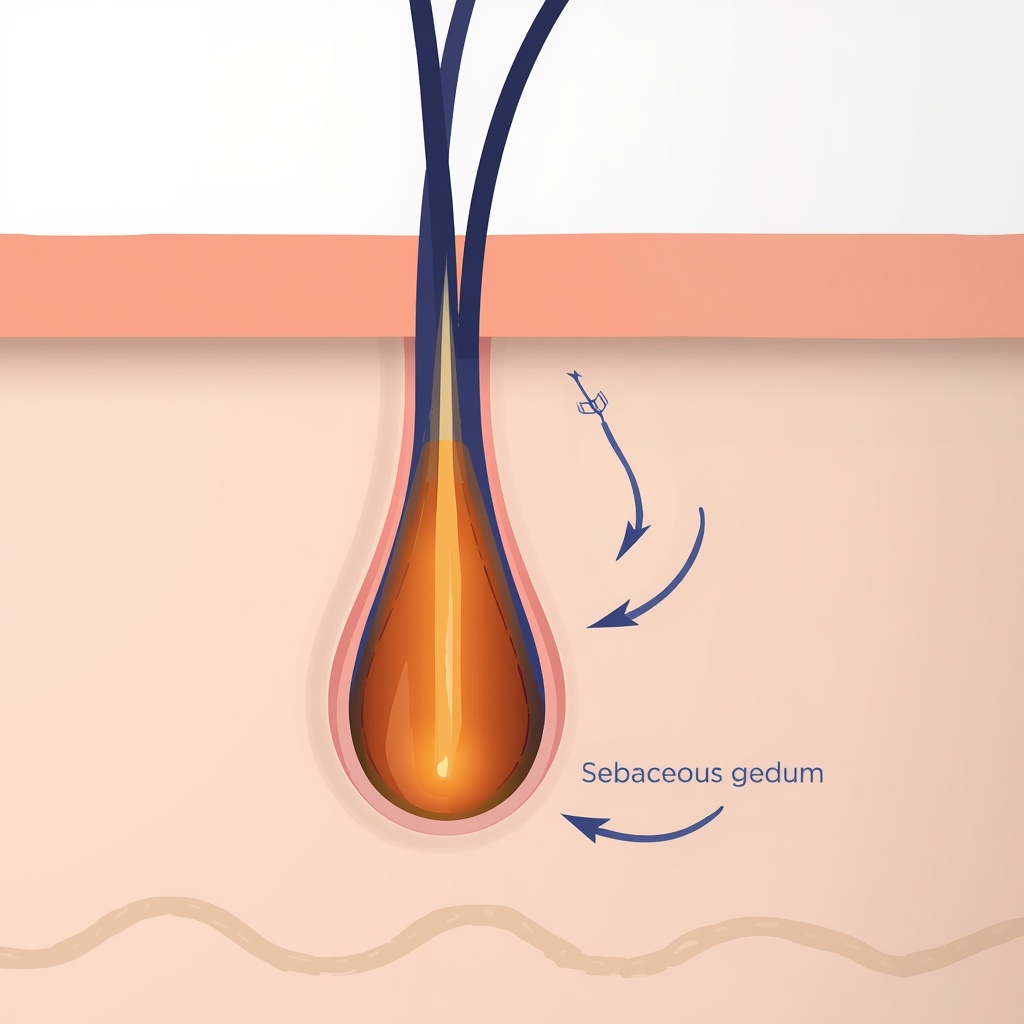
Isotretinoin also inhibits keratinization. It prevents the buildup of dead skin cells inside hair follicles. This reduces microcomedone formation. It has anti-inflammatory effects. It suppresses neutrophil chemotaxis and reduces inflammatory cytokines including interleukin-1 beta and tumor necrosis factor-alpha.
Key mechanisms:
- Sebum suppression: Reduces sebaceous gland output by up to 90 percent.
- Keratinization inhibition: Prevents follicular plugging and microcomedone formation.
- Anti-inflammatory action: Suppresses neutrophil migration and inflammatory cytokines.
- Bacterial environment reduction: Dries the skin, reducing Cutibacterium acnes survival.
Conditions Treated by Accutane
The FDA approved isotretinoin for one primary indication. It is used off-label for related dermatologic conditions.
- Severe recalcitrant nodular acne: Multiple inflammatory nodules 5 mm or greater in diameter. Unresponsive to systemic antibiotics and topical therapy. A single 15 to 20 week course produces long-term remission in 85 percent of patients.
- Acne conglobata: Off-label use for severe interconnected nodules and abscesses. Specialist supervision required.
- Hidradenitis suppurativa: Off-label use for recurrent inflammatory nodules in axillary and groin regions. Evidence is limited.
Isotretinoin is not for mild acne. It is not for comedonal acne without inflammation. It is not a first-line treatment. Conventional therapy with topical retinoids, benzoyl peroxide and oral antibiotics must be attempted first. A 2-month waiting period is recommended before starting a second course. Acne may continue to improve after the first course ends.
Accutane Dosage and Strengths
Available Forms
Generic isotretinoin comes in six capsule strengths. All are oral and taken with food.
- 10mg capsules: Starting dose for sensitive patients or low body weight.
- 20mg capsules: Common starting dose for average-weight adults.
- 25mg capsules: Intermediate strength for dose titration.
- 30mg capsules: Maintenance dose for moderate-severe cases.
- 35mg capsules: Higher maintenance dose for larger patients.
- 40mg capsules: Maximum single-capsule strength. Used for severe cases.
Standard Dosing
The recommended dose is 0.5 to 1 mg per kilogram of body weight daily. Divide the total into two doses. Take with meals to improve absorption. A 70 kg patient takes 35 to 70 mg daily. This means one 20mg capsule in the morning and one 20mg capsule in the evening for a 40 mg total. Or one 40mg capsule daily if the prescriber approves once-daily dosing for maintenance.
A typical course lasts 15 to 20 weeks. Total cumulative dose should reach 120 to 150 mg per kg for optimal long-term remission. A 70 kg patient needs 8,400 to 10,500 mg total. At 40 mg daily, this takes 30 to 37 weeks. At 70 mg daily, this takes 17 to 21 weeks. Dose adjustments depend on side effect tolerance and acne response.
Some specialist protocols use up to 2 mg per kg daily for very severe disease including scarring or trunk involvement. This is off-label and requires closer monitoring. Once-daily dosing is not recommended by the FDA label. Divided doses maintain more stable plasma levels.
Missed Dose Instructions
If you miss a dose, skip it. Do not take two doses at the same time. Do not double the evening dose to make up for a missed morning dose. Doubling increases side effect risk without improving acne clearance. Resume the normal schedule at the next dose. Consistency over weeks matters more than exact daily timing.
Side Effects
Common Side Effects
Most patients experience at least one side effect during treatment. These are usually manageable and resolve after the course ends. FDA clinical trials report the following incidence:
- Dry lips (cheilitis) – 90 percent of patients
- Dry skin and dermatitis – 80 percent
- Dry eyes and reduced visual acuity – 40 percent
- Epistaxis (nosebleeds) – 30 percent
- Back pain and arthralgia – 25 percent
- Headache – 20 percent
- Nasopharyngitis – 15 percent
- Increased creatine kinase – 10 percent
- Musculoskeletal discomfort – 10 percent
- Upper respiratory tract infection – 8 percent
Serious Side Effects
Stop taking isotretinoin and contact a doctor immediately if you experience:
- Severe depression, suicidal thoughts, or aggressive behavior. The FDA issued a black box warning in 2005 for psychiatric adverse effects. A 2023 JAMA Dermatology meta-analysis of 25 studies found a 1-year absolute risk of depression of 3.83 percent. Suicide risk is less than 0.5 percent. Monitor mood closely during treatment.
- Intracranial hypertension: severe headache, nausea, vomiting, visual disturbances. Risk increases with concomitant tetracycline antibiotics. Avoid tetracyclines during isotretinoin therapy.
- Stevens-Johnson syndrome or toxic epidermal necrolysis: widespread skin rash, blistering, peeling. Stop immediately and seek emergency care.
- Pancreatitis: severe abdominal pain, nausea, vomiting. Discontinue isotretinoin immediately.
- Hepatotoxicity: yellowing skin, dark urine, severe fatigue. Monitor liver function tests before and during treatment.
- Inflammatory bowel disease: abdominal pain, rectal bleeding, severe diarrhea. Discontinue if these symptoms develop.
- Hearing impairment: ringing in ears, hearing loss. Discontinue and seek specialized care.
- Ocular abnormalities: corneal opacities, decreased night vision. Discontinue and see an ophthalmologist.
- Severe hyperlipidemia: triglycerides above 500 mg per dL. The FDA recommends stopping if hypertriglyceridemia cannot be controlled.
Who Should Not Take Accutane
Do not take isotretinoin if you are pregnant or may become pregnant. It carries a Category X warning. It causes life-threatening birth defects including skull abnormalities, heart defects and central nervous system malformations. There is no safe dose or duration during pregnancy. Do not take if you are breastfeeding.
Do not take isotretinoin if you have hypersensitivity to isotretinoin, vitamin A or any capsule component. Do not take if you have a history of pancreatitis. Do not take if you have uncontrolled hyperlipidemia. Do not take if you are taking tetracycline antibiotics or vitamin A supplements. Do not take if you have a history of inflammatory bowel disease unless a specialist approves.
Warnings and Precautions
iPLEDGE REMS Program
The FDA requires all isotretinoin patients to enroll in the iPLEDGE Risk Evaluation and Mitigation Strategy. This program began in 2005 and became a shared system in 2010. All prescribers, pharmacies and patients must register. The goal is to prevent fetal exposure.
Patients who can become pregnant must complete monthly pregnancy tests. They must use two forms of contraception simultaneously. They must answer comprehension questions before each monthly prescription. Male patients and patients who cannot become pregnant must also register and acknowledge the risks. No pharmacy can dispense isotretinoin without iPLEDGE verification.
Psychiatric Monitoring
Assess mood before starting isotretinoin. Monitor for depression, psychosis, suicidal ideation and aggressive behavior during treatment. The FDA received 394 reports of depression and 37 reports of suicide between 1982 and 2000. A 2023 meta-analysis of 1.6 million participants found no increased relative risk of suicide at the population level. However, individual patients may still experience psychiatric adverse effects. Stop isotretinoin immediately if mood changes occur. Further psychiatric evaluation may be necessary.
Lipid and Liver Monitoring
Obtain fasting lipid profiles and liver function tests before starting treatment. Repeat periodically during the course. Triglycerides may rise above 500 mg per dL in some patients. Stop isotretinoin if hypertriglyceridemia cannot be controlled. Liver enzymes may rise. Stop if jaundice or marked elevation develops.
Bone Mineral Density
Isotretinoin may decrease bone mineral density. This is a concern for patients with a history of osteoporosis or those on prolonged therapy. Premature epiphyseal closure has occurred in adolescents. Monitor growth in pediatric patients.
Drug Interactions
Isotretinoin interacts with several medication classes. Always provide your doctor with a complete list.
- Vitamin A supplements: Additive toxicity. Avoid concomitant use. Both are retinoids.
- Tetracycline antibiotics (doxycycline, minocycline): Increase intracranial hypertension risk. Avoid completely during isotretinoin therapy.
- Phenytoin: May alter phenytoin levels. Monitor closely.
- Systemic corticosteroids: May increase osteoporosis risk when combined with isotretinoin.
- Oral contraceptives: Isotretinoin does not reduce contraceptive effectiveness. However, some antibiotics prescribed for acne may reduce it. Use two forms of contraception as required by iPLEDGE.
- Alcohol: Increases triglyceride levels and liver stress. Limit or avoid during treatment.
Accutane and Pregnancy
Isotretinoin is absolutely contraindicated during pregnancy. The FDA assigns Category X. It causes severe life-threatening birth defects. Any fetus exposed during pregnancy can be affected. There are no accurate means of determining whether an exposed fetus has been affected. Birth defects include skull abnormalities, ear defects, eye defects, facial abnormalities, heart defects and central nervous system malformations.
Patients who can become pregnant must use two forms of contraception starting 1 month before therapy, during therapy and for 1 month after stopping. They must have two negative pregnancy tests before starting. They must have monthly pregnancy tests during treatment. They must register in iPLEDGE. If pregnancy occurs, stop isotretinoin immediately and consult an OB-GYN.
Isotretinoin passes into breast milk in small amounts. Breastfeeding is contraindicated during treatment. The potential for infant harm is unknown but theoretically significant.
Overdose Information
Overdose symptoms include severe headache, vomiting, dizziness, facial flushing, abdominal pain and temporary loss of consciousness. Isotretinoin is not dialyzable. Treatment is supportive. Contact poison control at 1-800-222-1222. Seek emergency care for severe symptoms.
Accutane vs Topical Retinoids
Isotretinoin and topical retinoids such as tretinoin and adapalene are both vitamin A derivatives. They differ in potency, route and indication.
Isotretinoin is oral and systemic. It treats severe nodular acne. It suppresses sebum production throughout the body. It requires iPLEDGE enrollment. It carries a boxed warning for teratogenicity. A single course often produces long-term remission.
Topical retinoids are applied to the skin. They treat mild to moderate comedonal and inflammatory acne. They do not require iPLEDGE. They do not carry the same teratogenic risk profile. They require continuous use. Acne returns when stopped. Side effects are limited to local irritation, dryness and peeling.
Do not combine oral isotretinoin with topical retinoids unless directed by a dermatologist. The combination increases skin irritation and dryness. Choose isotretinoin for severe nodular acne that has failed other treatments. Choose topical retinoids for maintenance after isotretinoin or for milder acne.
Storage and Handling
Store isotretinoin capsules at room temperature between 20C and 25C. Keep away from moisture, heat and light. Do not store in the bathroom. Keep out of reach of children. Discard expired products. Do not use if the seal is broken. Return unused capsules to the pharmacy through a take-back program.
Frequently Asked Questions
Is Accutane still available in the United States?
The brand Accutane is no longer marketed in the US. Generic isotretinoin is available under names including Absorica, Amnesteem, Claravis, Myorisan and Zenatane. All require the same iPLEDGE REMS enrollment and carry identical FDA warnings.
How fast does Accutane clear acne?
Most patients see initial improvement within 4 to 8 weeks. Significant clearing occurs by 12 to 16 weeks. A full 15 to 20 week course produces long-term remission in 85 percent of patients. Some patients need a second course after a 2-month waiting period.
What is the iPLEDGE program?
iPLEDGE is a mandatory FDA Risk Evaluation and Mitigation Strategy for all isotretinoin products. All prescribers, pharmacies and patients must register. Patients who can become pregnant need monthly pregnancy tests and two forms of contraception. No pharmacy can dispense isotretinoin without iPLEDGE verification.
Does Accutane cause depression?
The FDA issued a black box warning for psychiatric adverse effects in 2005. A 2023 JAMA Dermatology meta-analysis of 25 studies found a 1-year absolute depression risk of 3.83 percent among isotretinoin users. Suicide risk is less than 0.5 percent. Monitor mood closely. Stop isotretinoin and seek help if depression or suicidal thoughts develop.
Can you drink alcohol while taking Accutane?
Avoid alcohol during treatment. Alcohol increases triglyceride levels and stresses the liver. Both isotretinoin and alcohol raise hepatotoxicity risk. Limiting alcohol helps maintain safer lipid profiles and liver enzyme levels during therapy.
Can you take antibiotics with Accutane?
Avoid tetracycline antibiotics including doxycycline and minocycline. They increase intracranial hypertension risk when combined with isotretinoin. Other antibiotics may be used if prescribed by your dermatologist. Always disclose all medications to your prescriber.
Does Accutane affect birth control?
Isotretinoin does not reduce oral contraceptive effectiveness. However, some acne antibiotics may reduce it. iPLEDGE requires two forms of contraception regardless of medication interactions. Use one primary and one secondary method throughout treatment and for 1 month after stopping.
Why is Accutane so strictly regulated?
Isotretinoin causes severe birth defects in any exposed fetus. The FDA implemented the iPLEDGE REMS in 2005 to prevent pregnancy during therapy. The program requires monthly pregnancy tests, two contraception methods and pharmacy verification. This regulation is stricter than for most prescription drugs because teratogenicity is absolute and irreversible.
Can Accutane cause permanent side effects?
Most side effects resolve after stopping treatment. Dry skin and lips return to normal within weeks. Some patients report persistent dry eyes or night vision changes. Bone mineral density may decrease temporarily. Premature epiphyseal closure is rare but permanent in adolescents. Discuss long-term risks with your dermatologist before starting.
What should I do if I miss a dose?
Skip the missed dose. Do not take two doses at the same time. Do not double the evening dose to make up for a missed morning dose. Doubling increases side effect risk without improving acne clearance. Resume the normal schedule at the next dose.
Questions about Accutane?
VippHealth does not sell medication. We publish facts for patients and caregivers. Send corrections or questions to our editorial team.
Email the Editorial TeamSources and References
- U.S. Food and Drug Administration – ISOTRETINOIN Capsules Prescribing Information, NDA 050742
- DailyMed – Isotretinoin Capsules Drug Label, National Library of Medicine, Updated September 2025
- FDA – iPLEDGE REMS Program Information, Updated February 2026
- PubMed – Huang YC et al. Risk of Suicide and Psychiatric Disorders Among Isotretinoin Users. JAMA Dermatology. 2023
- PMC – Wysowski DK et al. Isotretinoin, depression and suicide: a review of the evidence. BMC Dermatology. 2006
Editorial Standards
Our team reviews medical literature and FDA labeling to write each guide. We do not sell medication. It is not reviewed by a licensed pharmacist or physician.
Medical Disclaimer
This page is for education only. It does not replace advice from your doctor. Never start, stop, or change a dose of isotretinoin without medical guidance.
Emergency Notice
Call 911 for severe allergic reactions, chest pain, or trouble breathing. Call Poison Control at 1-800-222-1222 for a suspected overdose. If you experience suicidal thoughts, call 988 Suicide and Crisis Lifeline.